
島民日常 • 3|再訪直島㊦ 🚩必看地中美術館+倍樂生之家&最順的逛島路線✨ | 𝐁𝐲 𝐋𝐚𝟏
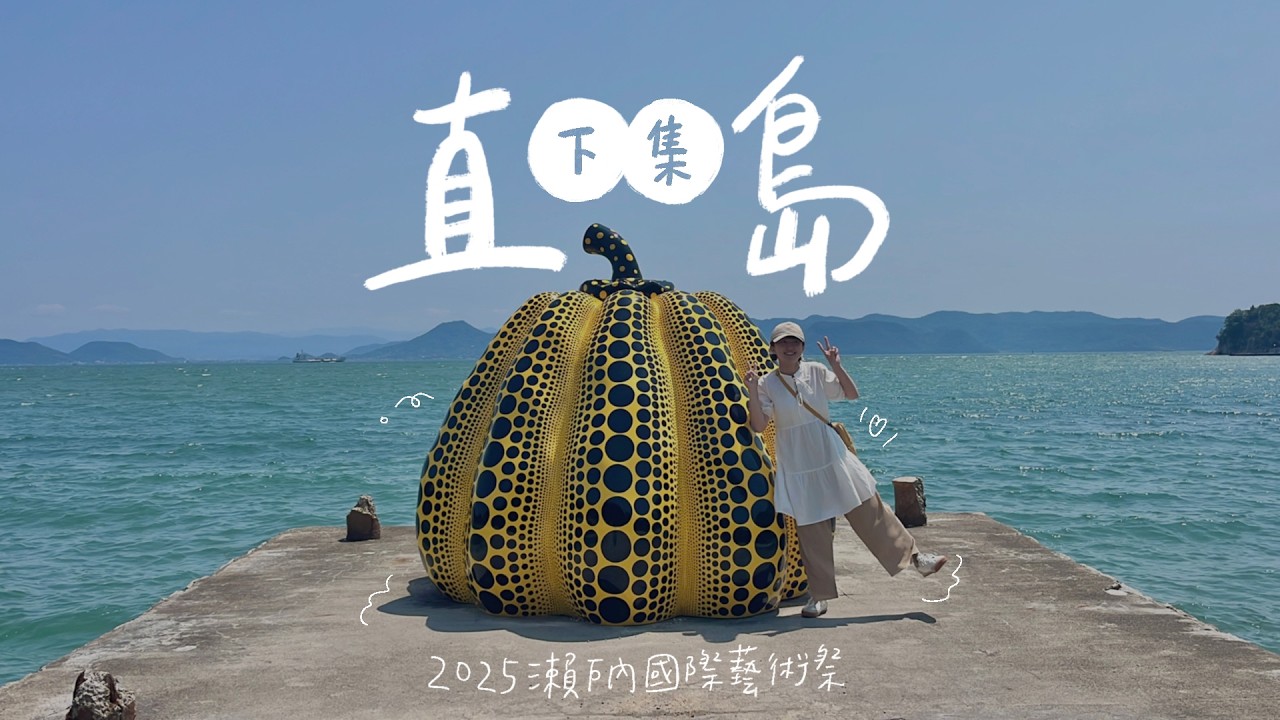
Last episode, we took everyone on an in-depth tour of Naoshima’s Honmura House Project and the Naoshima New Art Museum. This episode, we’re diving into the world of Benesse House. IG / lai.channel88 Now we’re going to bike to Benesse House. Even the vending machines here are so cute! 😍 The entrance to the Lee Ufan Museum is on the side of the mountain road. You can park your bike there and walk in. It’s about a 10-15 minute walk and you’ll reach the entrance. I forgot to mention that you can’t bike into the Lee Ufan Museum or the Yellow Pumpkin area (only Benesse House residents and staff are allowed to drive). Cars are also not allowed , so you have to walk that section. If you don’t want to walk this section today, you can take a ride, but the shuttle bus costs 300 NTD per adult . If you’re walking, it takes about 10 minutes to walk from the Lee Ufan Museum to Benesse House, so it depends on whether you want to wait for the shuttle bus. We’re there ! (Image source: Freunde der nationalgalerie official website) Lee Ufan was born in South Korea and is an internationally renowned artist (Image source: GOETHE official website). His works usually use simple materials such as stone, iron, paper, glass, etc., which restrict the creation of too many things and use the simplest way to present the characteristics of the material itself and the relationship between space . Therefore, the works in the museum (Image source: GOETHE official website) have a lot of white space and a minimalist aesthetic (Image source: Bennesse House official website). The semi-underground art museum is also a building specially built for him by Tadao Ando. This is also the first art museum established in his personal name. There is a very famous work of his called Infinity Gate outside. I think his works of art are quite abstract. You may not know what they mean at first glance , but I think the interesting thing about art is that when it puts something here, you will walk to this place specifically to see the scenery here (from Lee Ufan’s book “The Answer”) “Provide visual opportunities to encounter the world, rather than creating objects for people to see” Is it a bit like a stepping stone? Leading you to different places to experience different corners of the world. The art museum is in that place , but after you walk down from there , if this artwork is not there, you might just go that way. But because of this artwork, you will come over here to see the sea. I think this is the meaning of the existence of the artwork (opposite the Lee Ufan Art Museum).
The ticket for Valley Gallery is included in the entrance of Benesse House. The entrance is not very eye-catching. I missed it the first time I came here. 😀 You can’t record videos inside, but you can take photos. So here we use pictures to tell stories for everyone. When you enter, the first thing you see is hundreds of steel balls floating on the water. These are works from Yayoi Kusama’s Narcissistic Garden series. The steel balls will float and collide on the water with the wind (the background sound was recorded by me on the spot) Empty~/ Empty~/ There’s a very subtle, ethereal feeling. 🥹Going up further, you’ll see Tsuyoshi Ozawa’s “88 Slag Buddhas.” This work, made from industrial waste slag on Toyoshima Island, is inspired by the 88 Buddha statues, the number of which is inspired by the famous Shikoku Pilgrimage, which requires visiting 88 temples. This echoes the scars, history, and environmental experiences of this land. Besides the pond, there are countless steel balls in the garden in front of the gallery, which you can admire up close and take photos of. It really makes you feel (inexplicably narcissistic?) like you’re the center of attention. 🤩 / Next, there’s another building by Tadao Ando, with a semi-open design that allows for the flow of wind, sunlight, and rain. The U-shaped design lacks excessive design elements. At the end of the corridor, you can see the steel balls bathed in sunlight. They’re clearly static, but the effect on the stairs is something like (do you understand I’m quoting a famous line from elementary Chinese? 🥹) After a gentle climb down the hillside, turning around, you’ll see that the center of the “Hui” (circular) building is actually an exhibition space. The exposed concrete facade creates a slanting sun when the light is just right . I find it incredibly beautiful. Another masterful collaboration between two masters, showcasing art and architecture. 😍 (Opening in 2022, this will be Ando’s ninth building on the island.) Incidentally, this is also Tadao Ando’s latest work on the island, before the opening of the New Museum of Fine Arts! On the way from the Lee Ufan Museum to Benesse House, there’s a fork in the road . Down the road, you’ll see a work by Cai Guo-Qiang, a work not included in this year’s art season, but likely a previously invited artist for Benesse House . This work is based on feng shui principles, using Chinese Taihu stones to regulate energy flow (yes! It really works in a bath!). There’s also a bathing area in the “Dragon’s Lair,” where energy is concentrated (every Sunday from March to June and October to November). It’s open seasonally, and guests of Benesse House can pay to experience it. It’s super cool. 😍 Further down, you can see the ocean! Absolutely beautiful! It’s been ages since I last walked on the beach! I had so much fun! 😍 And the beaches here are absolutely gorgeous! The sea is super blue! Like, emerald green? 😍 A very light, translucent blue! So beautiful! If you’re ever in Naoshima, remember to go surfing because there are so many beaches you can go directly to. 🥰 It’s super comfortable , but my shoes were filled with sand. 😀 Next up is Bennesse House (Image source: Bennesse House official website). This was the Bennesse Group’s first location on Naoshima in the 1990s. Unsurprisingly, it’s also a work by Tadao Ando. 😆 What’s unique is (Image source: Bennesse House official website) that this is not only an art museum but also a hotel. If I had the chance, I’d really love to stay there. Not only can you enjoy the exclusive nighttime museum tour (I’ll explain why later😆), but you might even get to stay in a room once occupied by a famous artist. 🤩 The artworks in the museum can be roughly divided into those from the early period, those from the group’s procurement invitations, and those from the 1994 “Outside the Boundary” exhibition. The former is mostly displayed indoors, with Etsuhiro Suda’s “Weeds” and Richard. Takashi’s “Mud Rings of the Avon River in the Seto Inland Sea” and Janis Kounellis’ “Untitled” are both located outside the museum . Brice Nauman’s “100 Life and Deaths,” the latter of which echoes the exhibition theme, is located outside the museum (Image source: Bennesse House official website). Hiroshi Sugimoto’s “Time Exposed” and Kan Yasuda’s “Heavenly Secrets” are both fascinating. (Image source: Bennesse House official website) For example, the playful “Weeds” growing between exposed concrete surfaces. Etsuhiro Suda is a truly remarkable wood-like sculptor! The flowers and bamboo carvings in the Bennesse House Go Club are also his works. Made of wood, “Untitled” is a stereotype scroll made from island waste and household items. Compared to the previous photo, it has an extra layer of space. 😆 Because of its weight, it keeps sinking, so it’s now slightly lower than its original ceiling height. “Tenmi” is one of the few works of art you can touch firsthand . Its gentle form embraces every visitor who lies down here like a palm (Image source: Bennesse House official website). Because the stone was too large to fit through the museum’s doors, it was originally suspended from the atrium. 😆 Admire this space, which was once intended to be used as a tennis court within the hotel.😆 Hiroshi Sugimoto specifically aligned each photo with the sea level. Looking left and right through the gaps in the building designed by Tadao Ando, you can see the sea and sky connecting the Seto Inland Sea. ✨ Although I love seeing these details , it’s too much to describe them all. 🥹 I’ve linked the reference materials in the information section, so if you’re interested, you can check them out. ☺️ I personally liked this passage when I was researching. Because Tadao Ando designed the buildings first and then invited artists to move in , they encountered a problem. Tadao Ando’s works are amazing, which is a major attraction of Benesse House. But how can you find artists’ works that match his? How can you make the artists’ works dominate the aura of the building instead of being overwhelmed by it? Thank you again, Mr. Akimoto🥹 This really tested the efforts of the curators at the time🥹So they searched for a long time before finding some very good works of art. They even used a very clever method. After all, Benesse House is also habitable. At that time, they invited a group of artists to live there. Then, they removed all other things from their rooms and left them with a lot of painting supplies. They specifically told them, “You can create as much as you want in this space☺️” It was a bit like inviting them to create here for free , and they really achieved this goal. Different artists have their works in different rooms. I think it’s very interesting🥰The Lee Ufan Museum is a little smaller than Benesse House. I walked around it in about 15 minutes. I think if I had to choose between the two, I would go to Benesse House because Benesse The house is not only large, but also has a richer collection of artworks . Some of the artworks may be interesting even if you don’t necessarily understand their content, so I highly recommend that you go and have a look. By the way, both museums are free to enter with a passport valid during the art festival, and no additional payment is required. For details about the two buildings and the introduction to the artworks, you can refer to the introduction of NANA Wet Woman in the previous episode, which has introduced a lot, so I won’t repeat it here! If you’re interested, you can go and watch the previous episode ☺️ I really think they wrote it very well. The Seto Inland Sea is so blue and beautiful 🤩 And the weather is pretty good today . You can see the beautiful Seto Ohashi Bridge in the distance . Continue walking down the road next to Benesse House and you will reach this place, Benesse House/Beach Pavilion, and then you will see the pumpkin over there. Benesse House/Gear Shop & Park Pavilion This area is basically an area that is accessible only to guests staying at Bennesse House. This side is the shop. In addition to the shop, there is also (Photo source: Bennesse House official website) You can buy a ticket to enter Hiroshi Sugimoto’s “Corridor of Time”, but the rest of the area is for guests staying at the island only . Even if you visit the island three times, you still can’t finish exploring it 🥹 I didn’t plan to go to the Corridor of Time this time, but you can see it from the outside (Photo source: Bennesse House official website) Hiroshi Sugimoto’s “Glass Teahouse ‘Monchoan'” is a transparent teahouse. Since he’s an artist and photographer , he has many of his sea-themed works here . If you’re a fan of Sugimoto’s work, check out the Corridor of Time! Continue walking a little further along the beach and you’ll see the yellow pumpkin! Let me show you how I take photos while traveling alone 😀 It’s so awkward, hahaha. But you can always ask the person behind you for a hand! People usually help each other out, which is pretty cute! It just depends on your luck how good the photos are. After taking a photo with the pumpkin, it was a bit awkward to take a photo of something so large in front of everyone. 😀 Next to the pumpkin is a small torii gate . I heard that there are stones on top of it , and if you place a stone on it, your wish will come true! I’ll place one too! I’ll place it on the hole facing the sea, looking out to sea for me 🥰 It ‘s so beautiful 🥹 Pumpkin Bye 👋🏻 Before we went, everyone said the Chichu Art Museum was so beautiful! I’m so excited to finally get in! 🤩 You can buy tickets for the Chichu Art Museum online! Because it’s so popular, we recommend booking online! Photography is strictly prohibited inside the museum! It looks like it ‘s built underground, but during construction, they actually dug up the soil and then covered it back up to create the illusion of being underground. There are only three artists working on the project, but they’re all very unique! The main artwork is Monet’s water lilies , and since the entire building was designed by Tadao Ando, the exposed concrete is a key feature . On the way to the Chichu Art Museum, there are tons of flowers planted along the way , all designed to evoke Monet’s “Water Lilies” painting inside! Before entering the Chichu Art Museum, you’ll first walk down a slope, through a square door, and then down a long corridor until you reach the end. You’ll see the square staircase, which everyone who visits the Chichu Art Museum must take photos of. It’s also the last place you can take photos of before entering the museum (Image source: Bennesse House official website). As mentioned earlier, the Chichu Art Museum’s building is almost entirely underground. This design is intended to minimize the building’s impact on the natural landscape of the Seto Inland Sea and Naoshima Island. However, although it is underground, it utilizes multiple voids to bring in natural light, allowing light to flow through the gaps over time. You’ll almost forget that the building is located in “Chukushi” 😆 There are only three exhibition spaces in the museum, each showcasing the works of three artists (Image source: Bennesse House official website) First up is the museum ‘s most iconic work, Monet’s Water Lilies. It’s almost as if the Chichu Art Museum was designed specifically for it. Wearing slippers is essential for this experience, and a closer look reveals a soft grayscale palette of light and shadow . Besides the architectural design, which allows for multiple refractions of light, the 700,000 angled pebbles dotting the floor also coordinate the light source, allowing viewers to experience the painting in the most natural way possible without damaging it. This design is said to be the result of Mr. Akimoto’s extensive research into Monet’s work, which he devised to understand his vision (he simulated the painting’s appearance in person to measure the required distance from the building). He even considered the distance from the work needed to best embody the artist’s vision (many considerations went into the exhibition space design!). The angles of the exhibition space were also meticulously adjusted (special instruments were used to measure the uniformity of light received at each endpoint!). I highly recommend spending more time here to experience the entire space and appreciate these three works in layers, from far to near. The next exhibition room is by James Turrell, the same artist whose works I loved in the previous episode. Compared to the absolute darkness of the Nan Temple, this one is perhaps absolutely bright. In the main exhibition room, you’ll first see a short staircase. After the museum staff explains, they’ll ask you to walk towards the blue projection screen, and then you’ll find that wow, this place is exactly the same as the Nan Temple 😀 They’re tricking my brain again. Let’s stop here for now 😆 Let me save this surprise for everyone who is here in person 🥰 (The video is from the 21st Century Museum of Contemporary Art, Kanazawa, not the Chichu Art Museum! But it’s almost similar!) In addition, there is a small space next to it. At first glance, you might think it’s a rest area , but it’s actually one of his creations, using a ceiling cut out of squares (Image source: Bennesse House official website) Including the clouds and sky outside into one painting is a collaboration with nature. If you’ve been to the 21st Century Museum of Contemporary Art, Kanazawa, it might feel familiar. There’s a similar piece there , and it feels like the worlds of art and museums are being connected. Finally, you have to go to the bottom floor of the Chichu Art Museum to see De Maria’s “Time/Timeless/No Time”. In the middle of the building, which is over two stories high , a huge granite sphere sits quietly , surrounded by wooden pillars covered with gold leaf arranged at different angles . He excels at using natural elements such as stainless steel, copper, and stone to create his works , and believes that “art is a medium that prompts the viewer to think about the relationship between the earth and the universe.” Doesn’t it seem very abstract? 😆 But later I found that it is actually similar to the works of the Lee Ufan Museum. Both are taken from nature and there are no extra annotations to allow everyone to feel, interpret and empathize with the works freely . That’s all I have to say! I think the space inside is very cool . There are actually only three main works of art in the museum, but each one has its own unique characteristics . You really have to come and experience its grandeur and awe in person. There is also a cafe inside the museum. It is the only place in the museum besides the entrance where you can take photos . They sell some simple snacks there, so if you want to eat, you can rest there. I also think that when the Chichu Art Museum was created, all the space designs and artists were decided from the beginning. Therefore, the design of the building and the works of art echo each other, which makes it feel very harmonious. I think this is the biggest difference between it and other art museums. The architectural design and the artworks complement each other and complement each other. You can go in and appreciate how Tadao Ando designed the angles and gaps of the exposed concrete to allow light to pass through, creating a very natural light source to illuminate the artwork while keeping the space clean and tidy. I think this is not easy. Looking at the works or the architecture alone is amazing, and the fact that they can be combined is even more amazing. After seeing it, you will understand why everyone thinks the Chichu Art Museum is so amazing. This is probably the biggest attraction of the Chichu Art Museum. If you have the chance, remember to visit the Chichu Art Museum. 🥹Finally , let me share my recommended route for exploring the island. As mentioned in the previous episode, since most of the cafes are concentrated in the main village and the business hours here are relatively short , I recommend that you visit the cafe plan, the main village, and the Naoshima New Art Museum first. I have tried it myself ➊ bicycle ➋ walking + bus . For example, if you take a bicycle, after visiting the main village, you can ride from the road near Nanji Temple to the parking lot next to the Lee Ufan Museum. Then walk in to visit Benesse House and the Yellow Pumpkin area. After that, walk back to the parking lot, ride to the Chichu Art Museum, and then return to the port to complete a clockwise circle. I recommend this because the mountain road near Benesse House (this is just the beginning, there are a series of continuous and infinitely steep slopes behind it 🫠) is really shaky 🥹. You have to get off the bike to move after climbing over a hill . So I strongly do not recommend riding to the Yellow Pumpkin after visiting the main village because you have to go to the museum again (which is really tiring 🥹). You can only go over this mountain or go back to the main village and take a detour . If you want to walk (you can take the bus because there is not much to see on the way!) (If you miss the bus, a leisurely 30-minute walk is also okay!) (Not recommended in the summer! It will be too hot 🥹) You can also go from the port to the main village , then take the bus to Tsutsuji-sou from the stop next to the Naoshima New Art Museum or in front of the Agricultural Cooperative Association, and then walk back from the yellow pumpkin entrance to the Lee Ufan Museum (the bus is in front of the Lee Ufan Museum!) You can also choose to walk or wait for the bus to the Chichu Art Museum, and then go back to Miyaura Port to catch the boat after you finish your visit ! Of course, if you have an appointment to go to the Chichu Art Museum early in the morning or you don’t want to eat in the main village and want to eat at the art museums around Benesse House, either place is fine! You can also reverse the route and go counterclockwise. Since there are so many art museums on Naoshima and the round-trip ferry time limit, I think if you want to explore in depth, you really need more than two days. If you only have one day, you may not be able to visit everything , or you will have to shorten the time you stay at each location. Also, a small reminder : since the Chichu Art Museum Nanji Kinza is very popular , it is recommended to make reservations at least one month in advance during the peak season. I hope this video can help everyone who is going to Naoshima. I will continue to share island hopping guides for other small islands in the Seto Inland Sea. Please leave a message to let me know which island you want to see the introduction of first. That’s the end of the record of Naoshima . See you at the next island . Bye 🤗
久等了!
上集收到很多暖心的留言,很謝謝大家和我一樣喜歡這些小細節!
畢竟藝術家、建築師和策展人們也是一般人,和我們一樣得生活,只要有煙火氣就會更貼近大家一點對吧!
下集集中火力在直島南區的美術館走跳,
希望下集的內容也能和大家創造共鳴!
也歡迎留言告訴我你接下來想看哪個島的介紹!
我來加速剪輯🔥
◍ NANA濕婦
部落格 ᔕ
https://vocus.cc/salon/65a4f317fd89780001fdb548/room/special_place
Podcast ᔕ
◍ 倍樂生之家官網
https://benesse-artsite.jp/zhtw/
𓆱𓆱𓆱𓆱𓆱𓆱𓆱𓆱𓆱𓆱𓆱𓆱
꒰ 小額贊助領取期間限定手機桌布🔥 ꒱
https://portaly.cc/laichannel88/support
꒰ 商業合作請洽📩 ꒱
Email:lai.channel88@gmail.com
Instagram:https://www.instagram.com/lai.channel88/
꒰ 𝐓𝐢𝐦𝐞 𝐜𝐨𝐝𝐞 ꒱
00:00 前導
00:12 李禹煥美術館
02:04 Valley Gallery 草間彌生自戀庭園
03:30 蔡國強文化大混浴&海邊
04:35 倍樂生之家
08:46 黃南瓜&沙灘上的鳥居
09:40 地中美術館
14:31 逛島路線整理!
꒰ 𝐅𝐀𝐐 ꒱
𝐂𝐚𝐦𝐞𝐫𝐚📷 𝐢𝐏𝐡𝐨𝐧𝐞 𝟏𝟑 𝐦𝐢𝐧𝐢 / 𝐂𝐚𝐧𝐨𝐧 𝐏𝐨𝐰𝐞𝐫𝐬𝐡𝐨𝐭 𝐕𝟏𝟎
𝐌𝐮𝐬𝐢𝐜🎵
⁕ 𝐅𝐢𝐠𝐮𝐫𝐢𝐧𝐞 𝐁𝐚𝐛𝐲( 𝐏𝐫𝐨𝐝. 𝐛𝐲 𝐀𝐮𝐠𝐮𝐬𝐭 𝐉𝐚𝐦𝐞𝐬 )
https://thmatc.co/?l=EB616493
⁕ 𝐘𝐨𝐮𝐫 𝐒𝐦𝐢𝐥𝐞𝐬 ( 𝐏𝐫𝐨𝐝. 𝐛𝐲 𝐘𝐨𝐮 𝐌𝐞 𝐀𝐧𝐝 𝐓𝐡𝐞 𝐏𝐢𝐚𝐧𝐨 )
https://thmatc.co/?l=DCEBD866
⁕ 𝐈𝐭’𝐬 𝐅𝐢𝐧𝐞. 𝐍𝐨𝐭 𝐆𝐫𝐞𝐚𝐭, 𝐉𝐮𝐬𝐭 𝐅𝐢𝐧𝐞 ( 𝐏𝐫𝐨𝐝. 𝐛𝐲 𝐂𝐚𝐥𝐦𝐢𝐧𝐠 𝐋𝐢𝐧𝐞𝐬 )
https://thmatc.co/?l=916680FE
#直島 #Naoshima #瀨戶內藝術祭 #SetouchiTriennale #地中美術館 #ChichuArtMuseum #倍樂生之家 #BenesseHouse #黃南瓜 #YellowPumpkin #李禹煥美術館 #LeeUfanMuseum #瀨戶內海 #SetoInlandSea #跳島旅行 #IslandHoppingJapan #日本藝術之旅 #JapanTravel #安藤忠雄建築 #TadaoAndo #瀨戶內海跳島