
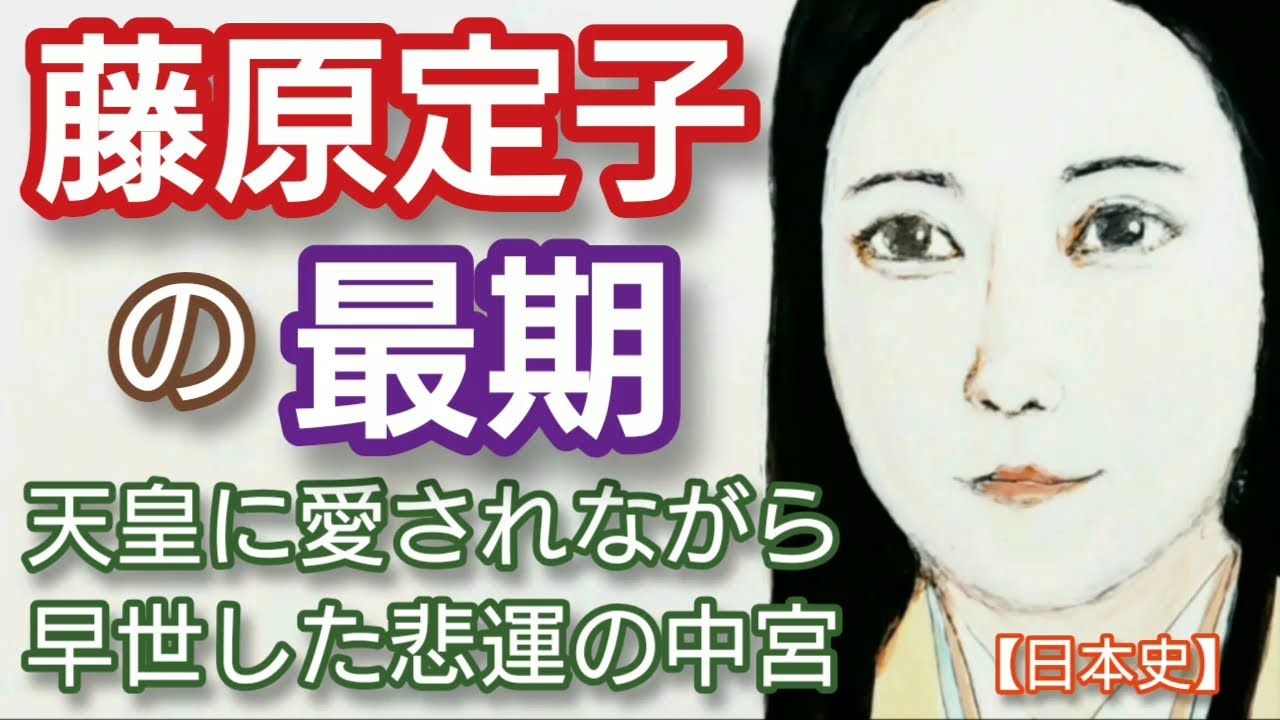
「光る君へ」に学ぶ日本史 藤原定子の最期 高畑充希が熱演 一条天皇に愛されながら早世し道長の娘彰子に敗れた悲運の中宮 父道隆の逝去で伊周ら中関白家は没落 Japan
Teiko Fujiwara’s final moments Learning about Japanese history from “To Shine” The unfortunate central shrine who died young despite being loved by Emperor Ichijo. Teiko Fujiwara was the unlucky chief priest who died young despite being deeply loved by Emperor Ichijo. Let’s take a closer look at Teiko Fujiwara’s life and end.
Sadako was born in 977, the second year of Teigen, as the eldest daughter of Michitaka Fujiwara and Takako Takashina. Her father, Michitaka, became her nobleman in the year that Sadako was born. Through the arrangement of her Teiko’s grandfather, Fujiwara Kaneie, Emperor Hanayama became a
Priest, and Emperor Ichijo, who was only 7 years old, ascended the throne. Kaneie became the regent as the guardian of Emperor Ichijo, who was also his grandson, and held power in his hands. Michitaka, the eldest son of Kaneie, had good looks and was popular with the court ladies.
Her mother, Takako Takashina, was selected as one of the thirty-six female poets. Sadako has inherited the qualities of Michitaka and Takako and has grown into a talented and talented woman. Emperor Ichijo celebrated Genpuku at the age of 11 on New Year’s Day in 990, 2nd year of
Eijo, four years after ascending the throne. Then, Michitaka had the 15-year-old Sadako enter Emperor Ichijo’s court as an attendant. Soso, as the word suggests, means to sleep next to a person, and there was a custom of
Having a girl, such as a court noble, sleep next to him on the night of the coming of age of the Crown Prince or prince. In this year, Kaneie became ill and passed away, handing over the post of Kanpaku to Michitaka.
Michitaka is frowned upon by the court nobles for his blatant personnel policy of rapidly promoting his own children. He is particularly at odds with his third son, Michikane. On the other hand, Sadako grew up to be a beautiful woman who was good at Chinese poetry,
Japanese poetry, and the biwa, in addition to her beauty, and was loved by Emperor Ichijo. Michitaka’s easy-going, literary-loving atmosphere led to him attracting many poetic wives to Sadako’s inner court. This literary and intellectual environment, together with the participation of court nobles and dignitaries, created a splendid court salon filled with elegance and taste.
Among them, Sei Shonagon, who entered the service around 993, the fourth year of the Shorei era, was supported by the brilliant talent of her Teiko, and was able to fully demonstrate her unique talent for reason and wisdom. “The Pillow Book” is the culmination of the many essays that Sei Shonagon wrote.
Regarding the origin of the name “Makura no Soshi”, the word “Makura no Soshi” was not a proper noun, and “Zoshi” had the meaning of “bound book” or “booklet.” At that time, “Makura no Soshi” was used as a common noun to mean a “diary” or “memorandum” kept by the bedside.
In Sadako Chugu’s possession, there were many “pillow books” and “diaries” that had nothing written on them yet. One day, Sadako asked Sei Shonagon, “What should I write on this?” and Sei Shonagon answered, “Why not use it as a pillow?”
Then Teiko said, “Let me give it to you,” and gave Sei Shonagon a large number of soshi on the spot. Sei Shonagon used this paper and diary to write about events in the court and his personal feelings. Eventually, these essays were put together under the title “Makura no Soshi.”
The cat named Komaro that appears in the drama is also thought to be based on the cat that appears in “The Pillow Book.” Sei Shonagon wrote that Emperor Ichijo was a cat lover and cherished a cat that he called “the guardian of his wife.”
In “The Pillow Book”, when Sei Shonagon goes to work for the first time, he looks at the back of Sadako’s hand and exclaims, “I never knew there were such beautiful women in this world.” Furthermore, in “Eika Monogatari,” which is said to have been written by Akazomeemon,
Who also served Sadako, the following is written about Sadako. It states, “Emperor Ichijo commented that there is no woman who can surpass Sadako in terms of her thoughtfulness and compassion.” Emperor Ichijo loved Sadako from the bottom of his heart. In 995, the 6th year of the Shōreki era, Michitaka placed Sadako’s younger sister,
Atom, in the inner palace of Imperial Prince Isada (later Emperor Sanjo), and the prosperity of the Nakakanpaku family reached its peak. Sadako was deeply loved by Emperor Ichijo, and she was at the height of happiness. However, the family’s misfortune suddenly struck in the spring of 995, when Michitaka suddenly passed away.
During his lifetime, Michitaka had hoped that power would be transferred to his eldest son, Ishu, but that was not possible. Emperor Ichijo’s mother, Junko, who was revered as the mother of the nation, feared that if Ishu came to power, her mother’s family, the Takashina family, would grow in power.
Therefore, after Michitaka, his younger brother Michikane became Kanpaku. Furthermore, when Michikane fell ill with an epidemic, he recommended Michinaga as his successor. Even though he was Emperor Ichijo, he could not go against the wishes of the mother of the nation. Michitaka’s young legitimate son, Ishu, became impatient with this ruling and escalated his
Conflict with Michinaga. Furthermore, perhaps out of arrogance, Ishu commits an incident of disrespect towards the retired Emperor Hanayama. Ishu had the daughter of the Minister of the Right, San no Kimi, as his mistress, but he mistakenly thought that Cloistered Emperor Hanayama was also visiting her.
Therefore, he ordered his younger brother Takaie to shoot at the sleeve of Cloistered Emperor Kazan’s robe with a bow. Cloistered Emperor Hanayama was startled and ran away, but his injuries were not life-threatening. However, in reality, Cloistered Emperor Hanayama was known as “Yonokimi”, not “San no Kimi”, which was the Minister of the Right.
This unprecedented incident was called the “Chotoku Incident,” in which Ishu and others rebelled against the retired emperor, and Ishu was exiled to Dazaifu. She became pregnant and left her inner circle in March, and Sadako, who was with her, was so shocked that she left home.
However, after Sadako gave birth to Imperial Prince Shushi, Ishu and others were pardoned the following year, and in response to Emperor Ichijo’s strong wishes, Sadako returned to the Imperial Palace even though she had become a priest. In February 999, Sadako gave birth to her first son, Imperial Prince Atsuyasu.
Impatient, Michinaga followed the example of his older brother Michitaka by having his daughter Shoko enter the court and make her the Chugu, and Sadako the “Empress Palace”, resulting in a state of one emperor and two empresses. In December of this year, Sadako gave birth to the second princess, but the second baby
Did not come, and her placenta remained inside her body. As a result, Sadako gradually weakens, and ends her life as a 25-year-old ephemeral woman who watched her rise and fall in a short time under the light of her older brother Ishu.
It was on a cold, snowy night that her body was buried in the dark and lonely Toribeno according to her will. Afterwards, Imperial Prince Atsuyasu, to whom Sadashi would have left his heart, lost any hope of ascending to the imperial throne due to his lack of guardianship.
However, it was at least a comfort that the princess, Miko, later became the adopted daughter of Michinaga’s legitimate son, Yorimichi, and became the middle court of Emperor Gosuzaku.
藤原定子は藤原道隆と高階貴子の長女だが両親の資質を引き継ぎ才色兼備の女性として、一条天皇の中宮となる。道隆の中関白家は我が世の春を謳歌するが、道隆が逝去すると道長が台頭して中関白家は急速に没落する・・
作曲 秋山裕和
http://www.hmix.net/
#nhk大河ドラマ #光る君へ #日本史 #平安時代