
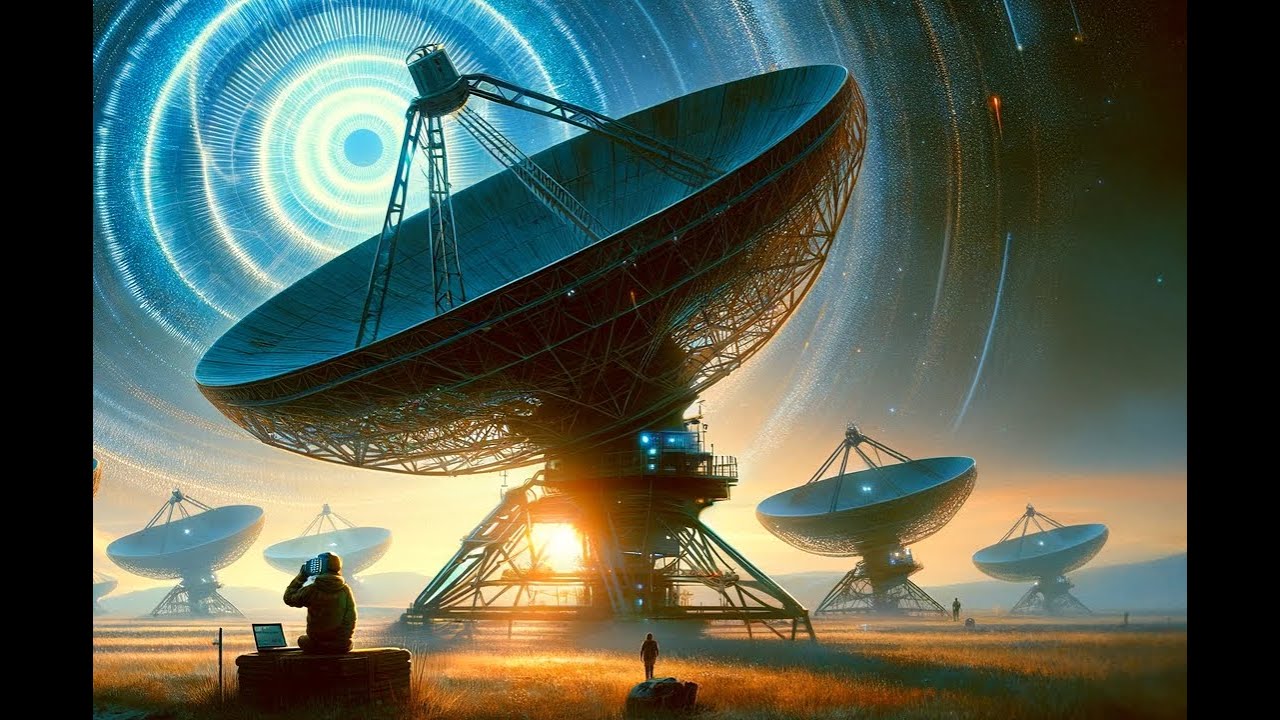
Cosmic Enigma: Are We Alone or Awaiting Extraterrestrial Contact?
Cosmic Enigma: Are We Alone or Awaiting Extraterrestrial Contact? Are we alone in the Universe? Is there any intelligence left in this immensity? If so, what are our chances of contacting her? Is it more advanced than us? How much? Does he know of our existence?
What would be the consequences for the future of earthly civilization? Some are convinced that they already possess definitive truths about this subject, despite the fact that they know it only superficially or not at all. So I propose to re-examine some of the arguments we currently have in this regard.
The US National Security Agency is spying on aliens! On April 23, 2011, the world media broadcast the news that the NSA (National Security Agency) developed algorithms for deciphering some messages received in the last decades from extraterrestrial civilizations, through the SETI (Search for Extraterrestrial Intelligence) program.
Here, then, an ultra-secret American military agency, which can listen, record and decipher practically any conversation, from any corner of the world, is interested in extraterrestrial civilizations. One of the documents published by the NSA, called “The Key to Extraterrestrial Messages”, is authored by Doctor Howard Campaigne and contains a series of 29 messages received
From extraterrestrial space through the SETI program. It is also shown how to build a decryption algorithm. One analyst commented that this document confirms not only the existence of extraterrestrials, but also the fact that the US government received transmissions from a civilization outside our solar system.
The NSA’s interest in SETI programs is not recent. In 1989, a subcommittee of the SETI committee of the International Astronautical Academy developed a document called the Statement of Principles Regarding Activities Following the Detection of Extraterrestrial Intelligence, also called the SETI Post-Detection Protocol.
It included the measures that should be taken in the event that absolutely certain scientific evidence of the existence of an extraterrestrial civilization is obtained. The protocol and its appendices state that, should a definite message be received from an extraterrestrial civilization, the discoverer will inform other SETI project participants for independent observations and monitoring.
Only after a general confirmation will a public announcement be made to the authorities. The response to the discovered intelligence will then have to be discussed and approved by the UN General Assembly. NSA experts were quick to denounce this variant of the protocol as crazy, stating, among other
Things, that for an advanced cosmic race, we could be a primitive life form, perhaps guinea pigs or culinary delicacies. But above all, the NSA considered it absolutely unacceptable for the United Nations, or an international group of astronomers, to represent Earth in communications with other worlds.
This right should belong only to the US president. The SETI projects to search for extraterrestrial intelligences began in 1960. Over time they became an international program with a multi-million dollar budget, involving thousands of specialists and the largest radio telescopes in the world.
Until recently, it was only known that short, unrepeated bursts of radio signals coming from space were occasionally detected. A famous example was the “Wow” signal recorded on August 15, 1977 by Jerry Ehman using the Ohio State University telescope. However, since then astronomers have not detected anything similar from that part of the sky.
The SETI projects were financially supported, up to a certain point, by the US government, then by private funds, but on April 22, 2011 (simple coincidence?), the most important SETI component, the one connected to the ATA (Allen Telescope Array) radio telescope network ) had to stop its activity due to lack of funds.
Fermi’s paradox – Where are they? From Frank Drake’s equation, it follows that only in our Galaxy, the Milky Way, there would be several dozen or several hundred civilizations. Some of them could be very old. Even with current technologies, Earthlings could colonize or explore the Galaxy in a few million years at most.
So, naturally, all very ancient civilizations could do the same thing, millions of years before us. So they should be here, now, manifesting through “miracles”, through phenomena that cannot be explained as natural or man-made, and some of these miracles should have cosmic proportions. However, we only notice a “gigantic silence”.
What could be the cause? This contradiction is called, in the literature devoted to extraterrestrial contacts, Fermi’s Paradox, since the tradition holds that the physicist Enrico Fermi would have been the first, in the forties, to ask the rhetorical question regarding extraterrestrials: They should be here; where am I?
Are we still alone in the Universe? This opinion, to which numerous scientists rallied, was also called the solipsistic hypothesis. Moderate supporters of this hypothesis admit that the Universe is too big, and the probability that we are the only civilization in it is tiny.
But they add that we are too far from each other, therefore unable to connect. What do we mean by life? To attempt an answer to Fermi’s Paradox, it is useful to break the problem into smaller ones.
The first will be the calculation of the chance that there is still life in the Universe outside the Earth. In turn, this implies defining what we mean by life. At the present time, science associates the notion of a living being with very large,
Very complex molecules and with an immense variety, which ensure several fundamental features: metabolism, growth, reproduction, the initiative to move. Carbon is the only element that allows the creation of such molecules, formed by stable chains of thousands of atoms.
It’s true, there was a lot of talk about other types of life, for example, that developed in oceans of ammonia instead of water, at temperatures much lower than those on Earth. A special place is occupied by the hypothesis of life based on silicon, silicon being, besides
Carbon, the only chemical element capable of forming long chains and complex molecules. But if oxygen combined with carbon gives carbon dioxide, the same reaction with silicon leads to silicon dioxide, so the lives in silicon should expire sand. At the temperature at which silicon dioxide becomes a gas, the long chains of silicon
Break down. The reactions of silicon are even less energetically efficient than those of carbon. In addition, no silicon compounds similar in complexity to those of carbon have been discovered in Cosmos. Leon Lederman, laureate of the Nobel prize for physics, speculated, in the year 2000,
That very special forms of life or intelligence could also exist in some special areas of the Universe, such as neutron stars, the extremely dense cores of some former stars In such areas processes happen millions of times faster than in the biological world.
It would not be inconceivable, he said, that the reactions in these stars would give birth to complex structures, endowed with intelligence, an intelligence with which we could hardly come into contact, among other things because in an earthly hour they would elapses the equivalent of thousands of years.
But, following the same line of reasoning, why couldn’t there be life and even intelligence based on completely different forms of aggregation of matter than the ones we know? Let’s say, for example, on the vibrations of the hypothetical etheric substrate of the Universe?
Of course, such hypotheses seem absurd today and we cannot accept them. But why not let the imagination fly sometimes and beyond the banal and palpable? However, the “carbonic life” can also hold surprises for us. For a long time it was considered that life cannot exist without the six essential elements:
Carbon, hydrogen, nitrogen, oxygen, phosphorus and sulphur. But in a press conference on December 2, 2010, NASA announced that the arsenic bacterium GFAJ1 was discovered in the sediments at the bottom of Mono Lake in Yosemite National Park (California) which has five of these essential elements, but phosphorus is replaced by its
Similar but toxic cousin arsenic, in its very DNA chain, that is, in the foundation of its reproduction. NASA biochemist Felisa Wolfe Simon noted that this discovery shows that life as we know it could be much more flexible than we generally assume, or than we might imagine.
How much life is there in the Universe? Astronomers have identified dozens of types of molecules that are the basic building blocks of carbonic life in outer space through spectroscopy three decades ago: water, carbon dioxide, formaldehyde, ammonia, acetaldehyde, methyl alcohol, benzene. A first amino acid was also identified: glycine.
If these compounds were detected from such a distance, it means that they exist there in enormous quantities. At the bottom of the sea, bacteria have been discovered that feel good at temperatures of 200 – 2500 Celsius degrees and at pressures of over 200 atmospheres; In Antarctica, bacteria
Were found capable of multiplying at minus 700 celsius degrees or which, although 12 thousand years old, could be brought back to life. Experiments carried out in 1998 at the University of Berkley (California) demonstrated that, at room temperature, the DNA molecule lasts over 35 years in a vacuum, and at the temperatures
Of outer space it could last indefinitely. It was calculated that primitive life forms could travel thousands of years through space from one star to another, “infecting” any suitable place. However, we are primarily interested in earthly life. Unfortunately, we have only one place where we can follow its evolution here at our place.
Earth was born about 5 billion years ago, as were our immediate neighbors. 4 billion years ago its surface was still an ocean of liquid magma, constantly subject to meteorite bombardment. The first fragments of solidified crust, identified in Greenland and Australia and having more than 4 billion years, already contain primitive traces of life.
This has led many to assert that, regardless of its origin, life will manifest itself, anywhere in the Universe, as soon as the conditions are met for it to be maintained and perpetuated. Between the permanent threat of glaciations and the greenhouse effect, the Earth’s biosphere has gone through several moments of balance.
In the beginning, the atmosphere of our planet was dominated by methane and carbon dioxide. Then, certain bacteria and algae capable of photosynthesis changed the composition of the atmosphere, releasing oxygen. The greenhouse effect has decreased and the temperature has dropped a lot 2 billion years
Ago there was even a first generalized ice age, from which, fortunately, we came out well. However, oxygen is deadly for any unprotected living organism. Only bacteria that were enveloped in a suitable protective membrane survived. Some of these have learned to “breathe”.
This process culminated 2 billion years ago, when nucleated cells, called eukaryotes, first lived individually, then in colonies, appeared. About 800 million years ago, these colonies turned into multicellular beings. Through successive mutations, 570 million years ago, animals with an external skeleton, then with an internal skeleton, were born from them.
Their evolution was interrupted by several “mass extinctions” that had a dynamizing role in evolution, as well as by many minor extinctions. Catastrophes were caused by enormous meteorites, by the explosion of supernovae, perhaps by the passage of the Solar System through a cloud of cosmic dust. Do technological civilizations necessarily self-destruct?
Therefore, almost 4 billion years of uninterrupted evolution were necessary, of which only the last seventh with beings that we can call animals, so that, in the last million years, man appeared on Earth. 100-200 thousand years ago the Neanderthal man prevailed, about 50,000 years ago the
Current man spread in the world: homo sapiens sapiens. Finally, the accumulation of science and technologies in the last few millennia, thanks to libraries and schools, led, in the 20th century, to that level of evolution that was called “technological
Civilization”, in other words to the era of space travel, of atomic energy , the internet and the cloning of living beings. What’s next? The “gigantic silence” of the Cosmos could also mean the fact that technological civilizations necessarily disappear after a relatively short time.
Could it be the crash of a huge asteroid on Earth, the explosion of a supernova, or other yet unknown cosmic threats? Much more likely is that a technological civilization could commit suicide. The level of carbon dioxide in the atmosphere has already increased.
The consequences began to be seen: the melting of glaciers, dry summers, storms of unprecedented violence. In a century, the sea could cover entire countries, and finally, paradoxically, by blocking some ocean currents, we could find ourselves in a new ice age.
Thanks to packaging and waste (including chemical, nuclear), the Earth is about to become a huge garbage can. The accumulation of highly toxic chemical compounds could, over time, have unpredictable consequences. Genetic experiments, after momentary advantages, could be followed, in a few more generations, by an irreversible degeneration of the human species.
Or viruses could be created for which there is no cure. However, the above dangers are negligible compared to those of a military nature. Carl Sagan estimated, in 1983, that the probability of a civilization’s self-destruction is all the greater the greater its expansionist tendencies, particularly of conquering the Cosmos.
He estimated that humanity’s chances of survival are, in the 21st century, 40%, and in the long term, 1%. If 10% of the existing nuclear arsenal on the globe were to explode (by mistake, as a result of terrorist actions), very few people would survive (perhaps none).
But the great dangers mentioned above: nuclear weapons, genetic experiments are inventions of the 20th century. The science of the 21st century will find (in addition to countless wonderful achievements) some much more effective methods of destruction, compared to which nuclear weapons or pandemics will seem like games children.
And if we survive these trials, the 22nd century will come, then the 23rd and so on, until the absolute weapon is discovered. Another explanation for the “gigantic silence” could be that a civilization, once it has reached its peak, necessarily degenerates.
It could be a genetic degeneration or a social one, caused by the increasingly carefree life. Frank Drake opined, for example, in 1980 that maybe the colonization of the Cosmos is not mandatory, as we were tempted to believe. How many civilizations are there in our Galaxy?
It can be estimated that, of the maximum 400 billion stars in our Galaxy, about a quarter have a sufficiently long life (minimum 5 billion years), probably three out of four possess planets and about a fifth provide these planets with long-term stable orbits (in this case
We eliminated the double or triple stars), which means about 15 billion “quiet” planetary systems. About a tenth of all stars are “third generation” so they also have rocky planets, like the Earth. One tenth of these are located in the “ecosphere”, at that distance from the central star which
Ensures that the water on the surface is maintained, for billions of years, in a liquid state. One planet in five is habitable (a mass between 0,5 and 10 times that of Earth), with active volcanism and tectonics. Two out of three planets have an orbit close to a circle, with axis inclination and day-night
Alternation acceptable for living beings, with moderate seasonal variations. In a radius of 54 light-years around the Earth there are about 1000 stars, of which 46 are very similar to the Sun. By June 15, 2011, 562 planets around more than 150 stars had already been identified.
And Andrew Howard from the University of California, the leader of a five-year study at the WM Keck Observatory in Hawaii, investigating 166 Sun-like stars, which are “nearby”, declared at the end of 2010: “Earth-sized planets are found in our Galaxy like grains of sand on a beach they are everywhere”.
Many have favorable conditions for life. In the Galaxy, there would therefore be about 20 million such islands (other calculations from the literature even give values of 500 million). It seems that the fact that they are conducive to life is enough for life to be born on them, in some form.
We estimate that on about a million planets, she will have the power and luck to reach the exuberance of the terrestrial biosphere. Probably on one tenth of these planets, at the end of a few billion years of evolution,
A being capable of abstract thought could appear and, again in one case out of ten, this being could build a “technological civilization”, ships cosmic, computers, nuclear reactors. So, if our assessments were correct, there is currently room in the Galaxy for about ten thousand technological civilizations.
It is estimated that a good part of the technological civilizations born in the Galaxy will self-destruct, degenerate, or perhaps lose their appetite for progress, within a few centuries or millennia after reaching a level comparable to the one we have in present.
I hope, however, that I shall not be considered unduly optimistic if I believe that one technological civilization in ten is wise enough to survive the perils of infancy and remain alive for millions of years afterward. This would mean a thousand surviving civilizations in our Galaxy.
Several hundred of them will have appeared and probably exist at the present time, and the rest will appear in the future. Maybe I was too optimistic. Perhaps we did not take into account other, equally important factors: a not very crowded
Area of the Galaxy, the circular orbit of the Sun around the galactic center, the distance from massive black holes or intense sources of gamma rays, a Moon-type companion which could further reduce this number. We remind you that the estimate was made only for our Galaxy, or it is only one of the approximately
100 billion galaxies, more or less similar, in the Universe accessible to our observation. In addition, we have serious reasons to believe that there are other worlds, perhaps “parallel”, perhaps from other aggregation states of matter. Consequently, it is almost absolutely certain that there are other civilizations in the Universe, some probably very old.
Extraterrestrial hypercivilizations! Some authors believe that several billion years ago extremely violent stellar explosions were frequent, releasing quantities of gamma rays capable of “sterilizing” an entire galaxy. With this hypothesis, we could accept, for simplicity’s sake, that the several hundred civilizations that we believe exist in our Galaxy were born, one after the other, at
A somewhat uniform rate, starting only a billion years ago. It would turn out that in our Galaxy a surviving civilization appears about once every 2-3 million years. This would therefore be an order of magnitude the “normal” distance in time between two neighboring civilizations.
As for the oldest civilization, it probably appeared at the time when there were only single-celled beings on Earth, if not much earlier. What might these civilizations look like today? To understand that we cannot answer this question, we have to think about our projects for the next centuries.
Genetic experiments on humans will continue despite the resistance encountered, with unpredictable consequences. Gradually, the human species will also change, just as the traditional fruits and vegetables have changed in the last decades into flawless but also tasteless varieties. It will be possible to control the “biological clock” in DNA, creating theoretically immortal
Beings and regenerating lost organs. Eventually, we will end up replacing ourselves entirely, “piece by piece”. Parallel to the applications of genetic engineering, computerized prostheses will spread, man becoming more and more a cyborg of the anticipation stories. All common objects will become “smart”.
Their remote control will be done only “with thought”, through microchips implanted in our brains. We will act with robot arms at great distances, in the Cosmos or at the bottom of the sea, or with microdevices inside the human body. Our descendants will probably live most of their lives in virtual reality, with computer
Networks also becoming completely different. Among the people we will meet in cyberspace will be faithful children of real individuals, living or deceased, possibly famous. Perhaps, in a more distant future, we will be able to give such a virtual personality
Even a shred of autonomous will, of initiative and maybe even a spark of consciousness, the ability to realize who it was, to and continue the activities. We hope to exceed the speed of light, perhaps through Einstein-Rosen bridges, or “wormholes”, but more certainly through other ways that we have yet to discover.
We will probably do teleportation as well. Maybe we’ll travel using vacuum energy, or zero-point energy. Maybe we will learn to pass into parallel universes, to short-circuit the great distances. Above, however, we only referred to the next few hundred years.
The French researcher Patrick Gross commented in a letter from the spring of 2010 that other civilizations could be even 6 billion years older than us. But even if it were only by a billion, or only a million years, it would be enough to
Surpass us in all aspects, being able to do, figuratively speaking, “anything”. Gross allows himself to assume that some of the first “successful” civilizations must also have achieved a kind of “colonization” of our entire galaxy, already many billions of years ago, then carefully controlling the places where other civilizations could later
Be born, adding that it is quite possible that it is impossible for us to perceive what they do, and still less to imagine what they are capable of doing. These civilizations, transformed after millions of years into something else, we could call them hypercivilizations.
Maybe space and time no longer have the same relevance for them as for us; maybe immortality and I live it simultaneously in all times; perhaps they no longer exist as individuals but only as parts of a universal consciousness from another realm.
But most certainly, they have become something beyond anything we could imagine and are no longer on the same level as humans. So, paradoxically, it is not the spatial distances that separate us the most, but the ones in time.
In this immense chasm of time, perhaps hundreds of millions of years, between the early hypercivilizations and earthly humanity, lies the key to the answer to most of the problems of our cosmic destiny. Maybe they are already here, but we don’t see them!
The astrophysicist VM Lipunov, from the Astronomical Institute in Moscow, calculated in 1997 that the probability that there are no very old civilizations in the Universe is 10 x 43000000, a value practically equal to zero. In other words, such civilizations exist.
Cocconi and Morrison argued, in 1959, in a famous article, that the probability of an exchange of information, between us and a civilization that preceded us by millions of years, is zero. The analyst Raymond Fowler was of the opinion that some creatures that preceded us by a
Billion years possess a baggage of intelligence and knowledge that exceeds ours about as much as we exceed that of a worm. The Canadian philosopher Jan Narveson tried to evaluate, in an article from 1985, the differences between civilizations very distant in terms of evolution.
“Let’s say, he asserts, that we ourselves would come into contact with some ants and they would explain to us how they build their leeches and the fact that they follow their leaders in an orderly manner during migrations based on freely assumed beliefs.
Would they impress us enough to be ready to grant them some rights for example at the United Nations? Rather not. But we would protect them, which would not exclude some limited experiments. An entomologist who aims to study the life of an ant colony will try to disturb its life as little as possible.
He will of course try to find out as much as possible, but he will not “present credentials” to the ant queen. If he has the opportunity, he will create a few robot ants, which he will send through the garbage, watching, from a safe place, the data transmitted by them.
The famous science fiction writer Arthur C Clarke wrote: “Sufficiently advanced technology cannot be distinguished from magic.” Isn’t such magic really manifesting around us, but we pretend not to see it? Hundreds of objects of inexplicable origin, the so-called OOP Arts, apparently “forgotten”
By someone unknown, were found; between these and the aluminum “heel” found in 1973 near Aiud. There are hundreds of thousands of reports of unidentified aerospace phenomena (UFOs), reports made in good faith by normal, serious people. There are hundreds of films or video recordings, thousands of photos, authenticated by all possible expertise.
In the last few years alone, news agencies have announced the declassification of military archives in Russia, the United Kingdom, France, Brazil with thousands of UFO sightings, some particularly spectacular, mostly inexplicable. The civil reports reproduce even stranger situations, which have even aroused the interest of university circles.
For example, at a five-day conference in 1992 at the Massachusetts Institute of Technology, the files of 2,000 cases involving people who claimed to have been abducted by UFO occupants were examined. And the accounts coincided in dozens of details. Astrophysicist and computer scientist Jacques Vallée, participant in large NASA projects,
Discovered dozens of common details between Marian apparitions (Fatima, Guadalupe, Medugorje, Lourdes) and UFO reports, but also between the latter and the traditions about encounters with flying creatures, ghosts, ghosts , fairies, dwarves, goblins. Strange signs appear every year in the ranges; of course, many are fakes, but others remain unexplained.
The first document in which they are mentioned dates from the year 815; and in an engraving published in 1678, they are explained by a so-called “reaper devil” who lays ears of corn on the ground forming two concentric circles.
To these we could add many other secular and religious traditions of all peoples and from all times, about entities with miraculous powers, descended from the heavens, or coming from a land of the magi. Our mentality has divided them between church dogmas and children’s bedtime stories, and
Science refuses to take them seriously, because it cannot reproduce them in the laboratory or observe them as often as it wants. However, they preserve the collective memory of peoples over thousands of years. Accepting the point of view of the skeptics – wrote Professor John Mack, a psychiatrist
At Harvard University, would mean “excluding a priori a vast amount of data, just because it contradicts a certain conception of the world, which is a much more irrational and even dangerous, in knowledge”. As stated in the eighties by Professor Allen Hynek, astronomer, consultant for almost 20
Years to the Air Force: “It began to be clear to us that, instead of being extraterrestrial, in the narrow sense, UFOs could be part of the same comprehensive intelligence that gave birth to the mosaic of religions and mythologies, from the dawn of humanity’s consciousness”.
Even Monsignor Corrado Balducci, an eminent member of the papal curia from the Vatican, declared in 1996: “The existence of extraterrestrials can no longer be denied, there are now too many testimonies about them and flying saucers, as UFO research proves. To say categorically that they are illusions and hallucinations or that the accounts of
An eyewitness do not represent proof, is a mistake”. The hypercivilizations will therefore not come to us in ships like those in the science fiction clichés, they will not descend in front of the White House, they will not invade us and they will not help us.
As for the SETI projects, we note the remark of the American philosopher Terence McKenna: “searching, waiting for a radio signal from an extraterrestrial source, is as culturally flawed an assumption as searching the Galaxy for a good Italian restaurant”. It could be that “someone up there” is patiently waiting for something from us.
A few centuries ago, the “civilization” by us of some “primitive” peoples led to the disappearance of alternative human ways of perceiving reality, thus to the narrowing of the set of knowledge tools. Maybe that “someone” doesn’t want to repeat this mistake and is waiting for us to mature
Without giving us, even through vague hints, their own vision of life and the Universe, in order to learn from us an original one, when we realize it. Or maybe he’s waiting for something we can’t even imagine. It’s good to be reasonable and accept our limits.
There will be unsolved problems in a century and a millennium. And the ones discussed in this article could, unfortunately, be among them. The Drake Equation! Drake’s equation is astronomy’s most famous attempt to answer one of humanity’s most burning questions: Are we alone in the universe?
In this case, the question of whether aliens exist does not refer to any life form, but to intelligent life forms that have the ability to communicate with beings from other planets. There may be life forms in the universe that Drake’s equation doesn’t account for.
But in terms of the probability of receiving extraterrestrial signals, the equation is a very good way to organize our questions. The equation begins by considering the general requirements for the existence of life and then approaches the result as each component of the equation narrows or widens the spectrum
Of possibilities (so the equation becomes increasingly difficult to determine). The existence of extraterrestrials is an enigma that is still being solved. The first problem raised by the equation is the average star formation rate in the galaxy. This doesn’t seem to apply particularly to the search for life forms, but that’s the
Beauty of Drake’s equation. It takes into account that for a species to exist, there must be a planet, and for a planet to exist, there must be stars. Stephen Hawking and extraterrestrial contacts! At the end of April 2010, Stephen Hawking, one of the best-known contemporary theoretical
Physicists, a professor at the University of Cambridge until 2009, aroused public interest and heated reactions, stating that we should avoid contact with extraterrestrial civilizations at all costs. If aliens ever visited us, I think the result would be a lot like Christopher Columbus’s first landing in America.
Former Canadian Defense Minister Paul Hellyer told The Canadian Press that “It is sad that a scientist of his reputation is contributing to what I would rather call disinformation on a very important subject. And Lord Martin Rees, royal British astronomer and president of the Royal Society warned,
In a conference held at the beginning of 2010, that extraterrestrials could be something beyond human understanding. I suspect that in the Universe life and intelligence could have forms that we cannot conceive. Just as a chimpanzee cannot understand quantum theory, there may be aspects of reality that are beyond the power of our minds.
About Stephen Hawking, he declared that he has known him for over 40 years; he is a remarkable person and because of this any prophetic statement he makes gets exaggerated publicity. But, I think we should not give any importance to his opinions in this field”. A specialist’s opinion!
Physicist Paul Davies, researcher in the field of cosmology, quantum theory and astrobiology, professor at Arizona State University, and since 2005 the president of the SETI working group of the International Academy of Astronautics, recently wondered: Are we looking for the wrong thing in the wrong place with radio telescopes? , at the wrong time?
Wasn’t it because they were or are already here a long time ago? One of the dangers of the search for extraterrestrial life is the anthropocentric bias. When we try to determine the motives and activities of extraterrestrials, we are tempted to think about what we would do in such cases.
Better to admit, says Davis, that it is simply impossible for us to guess what a civilization that, avoiding self-destruction, might want and what it would look like, has surpassed the stage in which we find ourselves by millions of years.
Davies is convinced that “biological intelligence” could be only a short stage in the evolution of intelligence in the Universe. Already computers, but especially their networks, are beginning to overtake us. These distributed systems will unite at the planetary level and over time will design, themselves, other better systems.
So it is unlikely that an alien is a flesh and blood being with a big head, but rather a gigantic artificial brain. Davies also believes that it is debatable that such an entity would actually be interested in contact with Earthlings. Colonization of outer space!
Over the last fifty years engineers have imagined all manner of spaceships to travel to the stars. At the beginning there was a lot of talk about the ORION ship, designed in the USA, or the IANTAR ion propulsion ship, designed by the Soviets.
The British Interplanetary Society then developed the plan for the DAEDALUS ship, capable of reaching, after 3,8 years of accelerated flight, 12% of the speed of light. The journey to, say, Barnard’s Star, located 5,9 light-years from Earth, would thus take about 50 years.
Here, after a few years of work, several other similar ships could be built, going further. A special role would also be played by automatic probes, which could explore potential future destinations. Michael Hart of Cambridge University had estimated in 1975 that, using vehicles traveling at
An average of 10% of the speed of light, our entire Galaxy could be colonized in less than a million years. Of course, this is in the idea that science and technology will stop at the current level, which seems extremely unlikely. Otherwise the time will be much shorter.
Other authors found higher or lower values for this time. Frank Tipler advanced the figure of 100 million years, Freeman Dyson or Iosif Sklovski spoke of 10 million years; Stanislav Lem, on the contrary, believed that this period would be only a few hundred thousand years.
But many wondered, didn’t someone else already take it before us? Many prefer to believe that we are alone in the Universe, or that the distances between possible civilizations are too great to allow contact. Just as many prefer science-fiction clichés about aliens, with ruthless invaders and empires at war.
Even many educated people still believe that current science already knows with certainty what exactly can exist and what exactly will never be possible. This sufficiency is inherent in our minds. Leonardo da Vinci himself was convinced that everything that could be discovered in mathematics had already been discovered.
Napoleon III’s experts proved that all electric motors are actually variants of perpetuum mobile. In 1877 the chemist Marcellin Berthelot wrote: “The universe no longer has any mystery”. In 1895, Professor Gabriel Lippmann said that “physics is a finished science”. Physicist Heinrich Hertz was convinced that his “Hertzian” waves would have no applicability,
Lord Kelvin said that “the flight of vehicles heavier than air is impossible”, Ernest Rutherford that nuclear fission, which he had achieved, could never be used . Today we are convinced that the radio, discovered a century and a bit ago, will forever remain the best means
Of long-distance communication; or that if Einstein showed that the speed of light represents a limit, then until the end of time no other principle of physics will be discovered that allows avoiding this limit. Repeated polls done in the USA showed that with an official statement regarding the arrival
Of extraterrestrials, traditional religions would collapse, science would have to recognize the fact that very little research would be of value. In the vicinity of infinitely more efficient technologies, the economy would collapse. In the event of a confrontation, our soldiers would have no chance.
In addition, it would be a blow to nationalism, nation states, politicians, a change that no government would allow. The common man does not like the upheavals of his reference systems either. The image of a simple, completely explainable world makes us feel safer and more relaxed.
In short, if the authorities find out about the existence of an extraterrestrial civilization and it is in their power to hide this information, they will do it with the utmost strictness. The writer Charles Fort wrote in this sense, almost a hundred years ago, that if some genuine
Extraterrestrials, with a human appearance, descended in full on New York and paraded through the streets for several hours, saying who they were, where they came from, transmitting their greetings, after which they would go home, after a while someone would be found
Who would not only say that everything was a prank, but even that he himself was the one who organized this prank. Following this announcement, the inhabitants of the metropolis would breathe a sigh of relief, saying that from the beginning they suspected that something was wrong with these aliens.
In this context of skepticism and self-limitation, we can ask ourselves: what is hidden beyond what we know and believe? Deep in the cosmos, in the dark corners of distant galaxies, there could be civilizations watching us, waiting for the right moment to enter the scene.
Perhaps signs of their existence have already visited us but been overlooked, or perhaps they are right now among us, hidden in plain sight. We might ask ourselves, in such a vast and mysterious universe, are we really ready for
The truth that could forever change our perception of ourselves and our place in the cosmos? More importantly, are we prepared to face the consequences of knowing this truth? Perhaps the answer to these questions is closer than we think, hidden in the stars we look at every night, just waiting to be discovered.
#alien #explore #extraterrestrial #anunnaki #history #god #interstellar #ozn #cosmos
Cosmic Enigma: Are We Alone or Awaiting Extraterrestrial Contact?
Are we alone in the Universe? Is there any intelligence left in this immensity? If so, what are our chances of contacting her? Is it more advanced than us? How much? Does he know of our existence? What would be the consequences for the future of earthly civilization?
So I propose to re-examine some of the arguments we currently have in this regard.
The US National Security Agency is spying on aliens!
On April 23, 2011, the world media broadcast the news that the NSA (National Security Agency) developed algorithms for deciphering some messages received in the last decades from extraterrestrial civilizations, through the SETI (Search for Extraterrestrial Intelligence) program. Here, then, an ultra-secret American military agency, which can listen, record and decipher practically any conversation, from any corner of the world, is interested in extraterrestrial civilizations.
One of the documents published by the NSA, called “The Key to Extraterrestrial Messages”, is authored by Doctor Howard Campaigne and contains a series of 29 messages received from extraterrestrial space through the SETI program. It is also shown how to build a decryption algorithm. One analyst commented that this document confirms not only the existence of extraterrestrials, but also the fact that the US government received transmissions from a civilization outside our solar system.
The NSA’s interest in SETI programs is not recent. In 1989, a subcommittee of the SETI committee of the International Astronautical Academy developed a document called the Statement of Principles Regarding Activities Following the Detection of Extraterrestrial Intelligence, also called the SETI Post-Detection Protocol. It included the measures that should be taken in the event that absolutely certain scientific evidence of the existence of an extraterrestrial civilization is obtained. The protocol and its appendices state that, should a definite message be received from an extraterrestrial civilization, the discoverer will inform other SETI project participants for independent observations and monitoring. Only after a general confirmation will a public announcement be made to the authorities. The response to the discovered intelligence will then have to be discussed and approved by the UN General Assembly.
NSA experts were quick to denounce this variant of the protocol as crazy, stating, among other things, that for an advanced cosmic race, we could be a primitive life form, perhaps guinea pigs or culinary delicacies. But above all, the NSA considered it absolutely unacceptable for the United Nations, or an international group of astronomers, to represent Earth in communications with other worlds. This right should belong only to the US president.
The SETI projects to search for extraterrestrial intelligences began in 1960. Over time they became an international program with a multi-million dollar budget, involving thousands of specialists and the largest radio telescopes in the world. Until recently, it was only known that short, unrepeated bursts of radio signals coming from space were occasionally detected. A famous example was the “Wow” signal recorded on August 15, 1977 by Jerry Ehman using the Ohio State University telescope. However, since then astronomers have not detected anything similar from that part of the sky.
The SETI projects were financially supported, up to a certain point, by the US government, then by private funds, but on April 22, 2011 (simple coincidence?), the most important SETI component, the one connected to the ATA (Allen Telescope Array) radio telescope network ) had to stop its activity due to lack of funds.
Fermi’s paradox – Where are they?
From Frank Drake’s equation, it follows that only in our Galaxy, the Milky Way, there would be several dozen or several hundred civilizations. Some of them could be very old.
This contradiction is called, in the literature devoted to extraterrestrial contacts, Fermi’s Paradox, since the tradition holds that the physicist Enrico Fermi would have been the first, in the forties, to ask the rhetorical question regarding extraterrestrials: They should be here; where am I?
Are we still alone in the Universe? This opinion, to which numerous scientists rallied, was also called the solipsistic hypothesis. Moderate supporters of this hypothesis admit that the Universe is too big, and the probability that we are the only civilization in it is tiny. But they add that we are too far from each other, therefore unable to connect. What do we mean by life?
To attempt an answer to Fermi’s Paradox, it is useful to break the problem into smaller ones. The first will be the calculation of the chance that there is still life in the Universe outside the Earth.