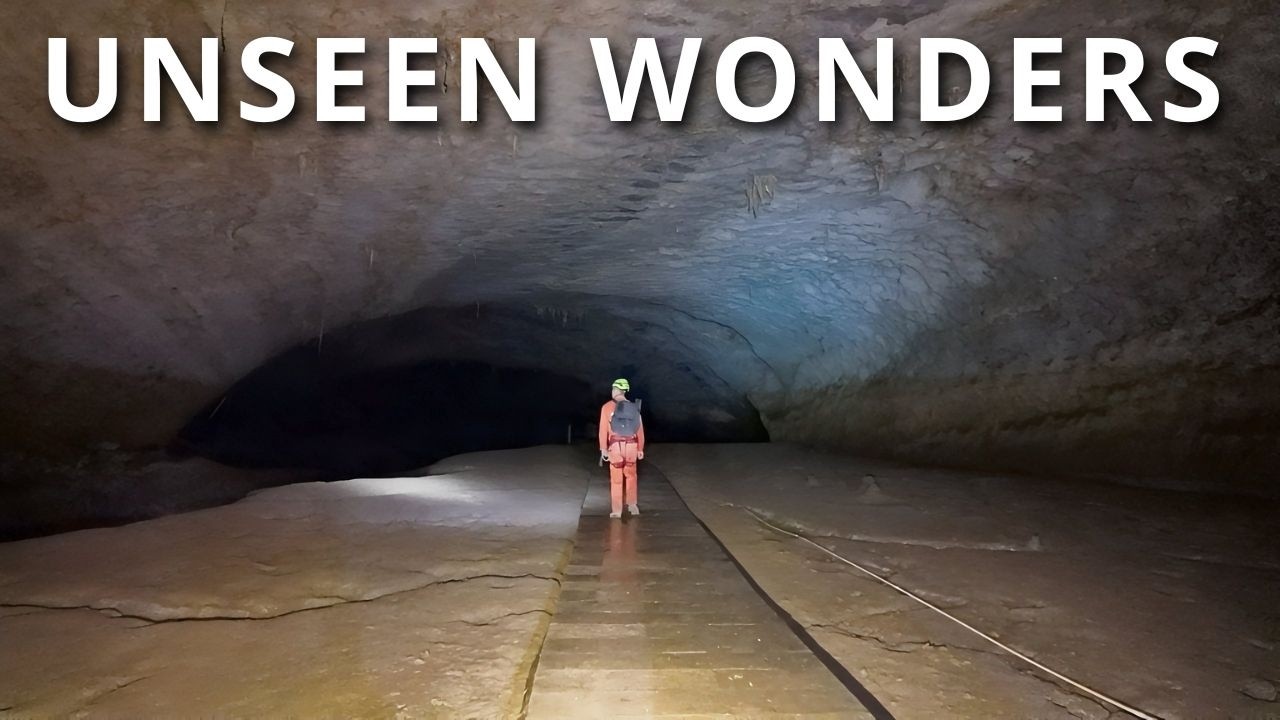
Unbelievable Places Few People Have Ever Seen
Our planet holds hidden treasures
still waiting to be discovered. Wonders that remain unknown to much of the world. Some places are filled with danger, yet once the obstacles are overcome,
astonishing marvels are revealed. They are landscapes where nature
unleashed its full imagination. Others are the work of human genius,
built in places where construction once seemed impossible.
In this documentary, we explore breathtaking corners of the planet
that remain largely unseen by the world. We’ll travel to extraordinary settings
that seem pulled straight from a dream. Dacao Cave – China
Amid the mountains and jungles of Guangxi, in southern China, lies a
geological wonder of monumental proportions. It is a colossal sinkhole that formed
when an underground cavern collapsed. Descending into it is perilous, demanding
advanced caving and climbing skills. The mouth of the sinkhole is astonishing.
Many of these formations drop vertically, the equivalent of descending a skyscraper.
Here, untouched virgin forests have thrived for thousands of years without human interference.
Sunlight filters softly through the opening, allowing species adapted to dim
light and high humidity to flourish. At the bottom, there is a massive
entrance to a scarcely explored cave. To uncover its hidden treasures, explorers must go
underground, squeezing through narrow rock gaps. There is a real danger of getting trapped
if space is misjudged, and oxygen can become scarce in poorly ventilated sections.
As you descend, vast caverns appear—true underground worlds concealed from the surface.
Rainwater and surface streams have seeped through the rock.
Sometimes, it’s ancient water, trapped for centuries, accumulating
minerals that give it a rich color. Deep within the earth, geological galleries
emerge, patiently sculpted over time. With every drop that falls,
minerals have slowly built up, forming genuine stone waterfalls.
Hukou Waterfall – China It’s the second-largest waterfall in
China and the biggest on the Yellow River. The water takes on a muddy yellow hue
as it carries a heavy load of sediment. Normally, the Yellow River is wide,
but at Hukou it suddenly narrows. When it constricts, the water
rushes through a natural funnel, gaining incredible speed and force.
What falls is not just water, but a thick mixture of silt, clay, and
sand that magnifies the waterfall’s power. Sơn Đoòng Cave – Vietnam This is the largest cave
on Earth discovered so far. It’s estimated to be big enough to
fit skyscrapers forty stories tall. In 1991, a local farmer named Hồ Khanh found the
entrance while seeking shelter in the jungle, but the cave remained unknown to science until 2009.
One of its most awe-inspiring spaces is the Garden of Edam, a hidden jungle
formed after the ceiling collapsed. Here, sunlight pierces through, creating the
ideal conditions for tropical trees to grow. Sumgan-Kutuk Cave – Russia
Located in the Ural Mountains, it’s one of the longest and
deepest caves in the entire region. It’s believed that its rectangular entrance formed
when the ceiling of an ancient cavern caved in. Erosion has shaped its contours until it
resembles a gateway into the earth itself. With three levels, vast chambers, and vertical shafts, the cave’s complexity hints at
hidden or still-inaccessible passages. Sea of Blue Tears – Pingtan, China This natural phenomenon takes place along
the coast of Pingtan, in Fujian Province. It’s caused by tiny marine organisms called
dinoflagellates that multiply in warm, calm, nutrient-rich waters.
When the sea is disturbed, each organism emits a blue flash that, multiplied
by millions, lights up the entire shoreline. It’s one of the few places on Earth where
this spectacle can be seen regularly and without special equipment.
Mount Chimaera – Turkey This legendary site in the Antalya Peninsula
features eternal flames that have burned from the rock day and night for thousands of years.
The small fires flickering on the hillside are caused by methane seeping from the
ground and igniting upon contact with air. When the gas meets surface oxygen, it ignites
spontaneously, creating flames that never go out. By day, the fires are faint, like
tiny flickers dancing in the wind; by night, they become a mesmerizing spectacle. Djawatan Forest – Indonesia
Located on the island of Java, it has become famous for its almost fantasy-like
atmosphere, reminiscent of scenes from epic films. It’s filled with massive century-old tamarind
trees whose trunks are wrapped in moss and vines. Originally planted during the Dutch colonial
period, over time they transformed into a forest that now feels completely natural.
Hverir – Iceland This geothermal area sits at the base
of Mount Námafjall in northern Iceland, where minerals paint the ground in surreal colors. No vegetation grows here—the heat, acids,
and gases make the terrain completely barren. From the cracks, white steam
plumes rise, visible from afar. The earth bubbles constantly with gray
mud pools that seem to boil endlessly. Red Beach – Panjin, China
In Liaoning Province lies this unique coastal wetland glowing in shades of red.
It’s the largest salt marsh wetland on Earth, serving as a sanctuary for
hundreds of bird species. The red color comes from Suaeda
salsa, a plant that thrives in saline soils and turns crimson in autumn.
Nowhere else on the planet does this plant cover such vast areas or display such
an intense red hue as it does in Panjin. Surtsey – Iceland
One of the youngest islands on Earth, it’s a living natural laboratory that
appeared suddenly in the North Atlantic. It formed between 1963 and 1967 when underwater eruptions piled up lava and ash
until they broke the ocean’s surface. Because it’s made of fragile volcanic
material, much of the island has already been eroded by the sea.
It became an ideal site for studying biological colonization, as
human access was restricted from the start. Today, Surtsey is home to
seabirds, plants, lichens, and insects—an ecosystem still in the making. White Volcano – Indonesia
This turquoise lake fills a volcanic crater surrounded by a desolate
gray landscape heavy with sulfur. The scene feels unreal and ghostly: dark,
leafless trees circle the lake while columns of sulfurous steam rise from the water.
It’s one of the few volcanic lakes in the world where the color of the water changes
constantly—sometimes within just hours or days. In ancient times, locals avoided the site after
seeing birds fall dead while flying over the crater, overcome by toxic gases.
Katskhi Pillar – Georgia This massive stone column towers above
the Katskhura Valley with striking force. Over the centuries, erosion wore
away the surrounding rock, yet this monumental block endured thanks to its strength.
At its flat summit stand a medieval church and a hermitage that seem to float in the sky.
In 1993, after the fall of the Soviet Union, Orthodox monk Maxim Qavtaradze climbed the pillar
and lived there in solitude for twenty years. Sanctuary of Madonna della Corona – Italy This church appears to hang between the sky
and the rock, as if suspended over a void. It’s literally embedded into a cliff face on
Mount Baldo, overlooking the Adige River valley. Its origins trace back to the 16th century, when the first church was built
on the same precipice in 1522. Honokohau Falls – United States
Located on the island of Maui, deep within the lush rainforest of the Iao Valley,
this site is remote and difficult to access. The surroundings, filled with towering trees,
vines, and ferns, evoke a primeval world. It remains untouched, free of human impact—a
pure expression of nature in its raw state. The falls plunge in two tiers down
cliffs covered in vibrant greenery. At the base, a vast natural amphitheater has
formed, with a large pool of water at its center. Wulong Geological Park – China
This geological wonder is home to the Three Natural Bridges, formed by
the collapse of prehistoric caverns. They are enormous sinkholes
sheltering hidden forests inside, like isolated worlds apart from the surface. Unlike other remote sites, here
there are marked trails that make it easier for visitors to explore.
Tianlong Bridge, with its almost surreal and fantastical appearance, has served
as a filming location for major movies. At the end of the route
stands the Tianfu Posthouse, a reconstruction of the official inn once
used by the imperial Chinese government. Today it’s a secluded place, but in the past it
was part of the imperial roads and trade routes connecting the southwestern provinces of China.
Salto del Agrio – Argentina Nestled in the Andes mountain range, this
waterfall is remarkable for the unusual colors of its water and rocks.
The hues of yellow, green, and red come from volcanic minerals and
sediments carried by the Agrio River. The water plunges into a circular crater-shaped
pool, surrounded by volcanic rock walls—like a natural stage crafted by the earth itself.
Zhangye Danxia National Park – China This park is famous for
its multicolored mountains, an outstanding example of Danxia formations—a
unique landscape of red sandstone rocks. Ancient Chinese poets described it
as an “ocean of solidified flames,” at a time when its origin remained a mystery. The hills undulate in smooth waves, with gentle slopes and sharp ridges
stretching like bands of color. Red tones come from oxidized iron, green from
copper minerals, yellow from sulfur compounds, and gray from clay mixtures.
Taal Volcano – Philippines Situated in Batangas Province, it’s known
both for its intense volcanic activity and for its extraordinary geological structure.
In January 2020, it erupted violently, sending a massive column of ash into the sky and
forcing tens of thousands of people to evacuate. The volcano sits within Lake Taal, a vast
volcanic lake formed by ancient explosions. Inside the lake lies a central volcanic
island, and within that island is an active crater holding another lake.
Even within that inner lake, there’s a tiny islet—often described as “the island within
the lake within the crater within the island.” Anlong Pyramids – China
Located in Guizhou Province, these formations gained fame for their
striking resemblance to the pyramids of Egypt. Some theories claim they were man-made,
yet geologists agree they’re natural formations sculpted by geological
processes about 200 million years ago. Local authorities have identified at least
fifteen pyramids and are promoting the creation of observation centers and tourist sites.
Residents of Guizhou tell stories of a lost civilization behind their origin,
giving the area an air of mystery. Molnár János Cave – Hungary
This astonishing underwater cave lies beneath the city of Budapest—a
unique site for exploration and diving. Over thousands of years, infiltrating
thermal waters carved out its passageways. The result is an intricate labyrinth
submerged in warm water, with tunnels and chambers glowing beneath the surface.
Although it has been known since the 19th century, serious exploration began in the 1950s, and even
today new galleries continue to be discovered. Hengifoss – Iceland
This waterfall stands out for the striking contrast of its walls, where black basalt
layers alternate with red bands of volcanic clay. It flows from the Hengifossá River, which descends from volcanic plateaus
in the Highlands to the valley below. The cliffs were formed about five million
years ago by successive volcanic eruptions that laid down layers of lava.
Between those lava flows, iron- and clay-rich sediments accumulated
and gradually turned red through oxidation. Gao-chi-ling – China
This area of Chenzhou is famous for its dizzying trails that wind
along narrow ridges of rolling mountains. It’s been compared to a
sea of petrified red waves. The landscape visible today took around 20
million years of geological transformation. Although the trail is considered safe, some narrow
stretches without railings demand careful walking. It was once little known, until viral photos
on social media made it a popular destination. Canaima National Park – Venezuela
Located in Venezuela’s Guiana Highlands, this park belongs to one of the oldest geological
formations on Earth—about two billion years old. Powerful rivers carve through the reserve,
forming lagoons tinted reddish and golden by high concentrations of minerals and tannins.
It resembles a lost world: vast green jungles broken by towering rock plateaus
that rise like natural fortresses. The tepuis have sheer
vertical walls and flat tops, resembling colossal tables
suspended above the forest. Their cliffs look so perfectly
sculpted that they appear man-made. From their summits flow rivers
and waterfalls, including Angel Falls—the highest waterfall on the planet.
Water has been streaming from its summit for millions of years, ever since erosion split
open the plateau into cracks and canyons. The cascade plunges from the top of a tepui,
dissolving into mist and spray as it falls. Lena Pillars – Russia
The Lena River begins in the Baikal Mountains of southern Siberia and flows north to the Arctic
Ocean, cutting through a cold, remote land. Along its right bank stretch these
breathtaking vertical cliffs made of limestone, dolomite, and shale.
Their origin dates back 500 million years, to the early Cambrian period, when
this region lay beneath shallow seas. Siberia’s harsh climate—icy winters and
warm summers—fractured the rock through cycles of freezing and thawing,
carving out pillars and spires. Manpupuner Rock Formations
(Man-Pupu-Nyor) – Russia This group of seven towering
stone giants rises from the wilderness of the northern Ural Mountains.
They’re considered one of Russia’s Seven Wonders for their rarity—massive rock pillars
shaped like human silhouettes or mythical giants. The region is blanketed in taiga and tundra,
with long, brutal winters and rugged terrain that’s difficult to reach.
Over millions of years, erosion stripped away the softer rock, leaving
behind these solitary, resilient monoliths. Anjihai Grand Canyon – China
Carved by the relentless force of the Anjihai River over thousands of years, this canyon
reveals cliffs streaked with vibrant colors. The sediments carried by the river have formed
reddish layers tinged with iron minerals. Despite its ancient origins, the
canyon only recently gained fame after aerial photos spread widely on social media. Dahab Blue Hole – Egypt
One of the ocean’s natural jewels lies in the northern Red
Sea, within the Gulf of Aqaba. The walls of this underwater sinkhole are
coated in coral, home to tropical fish, sponges, and a rich array of marine life.
It formed when a cavern collapsed, leaving a deep hole that eventually filled
with seawater and connected to the open ocean. Divers from around the world come
here seeking extreme challenges. The Blue Hole links to the sea
through a submerged passage. Yet despite its beauty, it’s deadly—the
passage has claimed the lives of divers who tried to explore it.
Local legend tells of a ghostly lady who haunts the Blue Hole,
luring the unwary to their tragic fate. Austfonna Glacier Waterfalls – Norway
This vast ice cap is located on Nordaustlandet Island, part of the
Svalbard archipelago in the Arctic Ocean. It’s one of the few Arctic places
where rivers, lagoons, waterfalls, and meltwater pools coexist on the ice. During the warmer season, meltwater gathers in
cracks and depressions, forming small rivers. Sometimes these streams merge
into great “arteries” of liquid water flowing across solid ice.
At the glacier’s edge—where the ice meets the ocean—the rivers plunge straight into
the sea, creating spectacular icy waterfalls. Capitol Reef National Park – Utah, United States
This protected area in Utah is known for its towering red cliffs, white rock
formations, and dramatic geological folds. The Fremont River runs east to west through the
park, carving a green valley amid the arid desert. Wind and water have exposed rock layers
spanning from the Permian to the Cretaceous, revealing 200 million years of Earth’s history. The red hue comes from iron
oxides in the rock, while uneven erosion has sculpted cliffs and ridges.
In the northern section, the bentonite hills were formed from volcanic ash that
chemically altered over millions of years. Their surfaces are soft and rounded,
since the clay erodes easily. The colors shift with moisture—bluish-gray
when dry, but greenish or reddish depending on the minerals present, such
as iron, manganese, or calcium. Kerala – India
This coastal state, known as “the land of the gods,”
is celebrated for its lush nature, ancient culture, and deep spirituality.
Its rich vegetation forms dense tropical forests that shelter elephants, tigers,
and brilliantly colored exotic birds. Golden beaches lined with swaying
palm trees stretch along its coast. Inland lie the backwaters—a serene network of lagoons and canals bordered by rice
fields, villages, and coconut groves. To the east rise the Western Ghats,
a mountain range blanketed with tea, cardamom, and coffee plantations.
Here lies Parunthumpara, a scenic viewpoint offering sweeping vistas of the region.
Tugela Falls – South Africa For a long time, it held the title
of the world’s tallest waterfall, until new measurements of Angel Falls in
Venezuela placed it in second position. It originates in the basalt
cliffs of the Amphitheater, a dramatic geological formation created by
volcanic eruptions around 180 million years ago. The name “Tugela” comes from the Zulu word
Thukela, meaning “sudden” or “unexpected,” referring to the force with which the
water surges during the rainy season. Pingshan Grand Canyon – China
Recognized as one of Hubei’s natural wonders, this canyon impresses visitors with its steep
cliffs and the powerful river flowing through it. It was carved by the Jinsha River, whose
force sculpted for millions of years the rock layers formed by the Himalayan
uplift and Tibetan tectonic activity. In some places, the gorge narrows so tightly
that only one boat can pass at a time. To the west, not far away, lies
the Shiziguan Floating Bridge, an unusual walkway that
drifts on the Qingjiang River. Built with steel and floating foam, it
remains steady thanks to chains anchoring it to the riverbed.
Detwah Lagoon – Yemen Located on the island of Socotra in the
Indian Ocean, this site is famed for its rarity and uniqueness—so much so that
many call it “Earth’s alien island.” Its tropical arid climate, influenced
by monsoons, creates striking contrasts: lush green areas during the wet season and
desert landscapes the rest of the year. The island split from Africa millions of years ago, and its isolation gave rise to
species found nowhere else on Earth. Along Socotra’s coast lies Detwah Lagoon,
a turquoise mirror framed by white sands. Golden tongues of sand stretch
into the water like brushstrokes, forming curves and spirals
that shift with every tide. Death Valley – United States
Located in southeastern California, within the Mojave Desert, it’s known for its
extreme heat, dryness, and for being one of the lowest points in North America.
Its landscapes change dramatically: the Eureka Dunes appear as a golden sea
of sand surrounded by dark mountains. These are California’s tallest dunes, and due to their remoteness, the area
remains silent and rarely visited. Another extraordinary site within Death Valley is
Badwater Basin—a white, cracked expanse of salt. Its lowest point lies 86 meters,
or 282 feet below sea level, the lowest elevation on the continent.
The surface is covered with geometric salt patterns formed by the sun’s
expansion and contraction cycles. Racetrack Playa, a dry lake in
the northwest of the valley, is a flat plain of hardened, cracked
mud encircled by barren mountains. Some rocks, weighing up to 300 kilograms,
about 662 pounds, mysteriously move across the surface, leaving long trails behind them.
The mystery endured for decades, until scientists discovered the stones glide when thin ice sheets
form beneath them and are pushed by the wind. Another striking feature, the Devil’s Golf Course,
is a jagged landscape of hardened salt formations that crack into sharp, irregular points.
The terrain is so rough that crossing it can be dangerous—the salt rocks are as
hard as concrete and as sharp as glass. Mount Kelimutu – Indonesia
In the heart of Flores Island rises this forested volcano, crowned with three crater
lakes—each with a color that changes over time. They shift from brilliant turquoise to emerald
green, black, brown, red, or even milky white. These transformations occur as volcanic
minerals react with gases and heat still emanating from within the volcano.
According to local legend, the lakes are the final resting place of souls:
one receives the spirits of the elderly, another of the young, and the third
of those who led sinful lives. Simpson Desert – Australia
This harsh, central region of the country is considered the world’s
largest desert of parallel dunes. Its remoteness and hostile conditions made it one
of the last areas of Australia to be explored. It forms the planet’s most extensive system
of linear dunes, with endless red ridges stretching up to 200 kilometers, about 125 miles.
The red color comes from iron oxides in the sand, which glow spectacularly under
the light of sunrise and sunset. Phong Nha–Kẻ Bàng National Park – Vietnam This impressive geological region contains a vast
cave system formed roughly 400 million years ago. The tranquil, green waters of the Son River
flow directly through the main entrance. Inside are enormous limestone chambers. Towering stalactites, stalagmites, and massive
columns have formed where the two meet. Zhijin Cave – China
Located in Guizhou Province, this colossal cave system is filled with
extraordinary geological formations. It’s known as “the largest underground museum on
Earth” due to the diversity of its structures, some of which are found nowhere else in the world.
The cave has expanded over two million years without major collapses,
accounting for its immense size. It includes a vast network of explored passages and reaches the height of
a multi-story skyscraper. Inside, rare formations appear—delicate gypsum
flowers, twisted columns, and thin rocky veils. Near the entrance, where sunlight reaches,
mosses, ferns, and lichens thrive in the damp air. Algar do Carvão – Portugal
Around 2,000 years ago, a volcanic eruption expelled lava, leaving behind an empty chimney.
Over millennia, water and other natural forces sculpted the hollow, creating a volcanic tube.
The tunnel leads to a dark green abyss, carpeted with ferns, mosses, and lichens
that cling to the moist volcanic rock. Quebrada Gata – Costa Rica
This canyon, blanketed in lush vegetation, is home to several
waterfalls feeding a crystal-clear river. It remains almost unknown—even among Costa Ricans—with no marked trails and
virtually untouched by tourism. Because of its isolation, many of
its waterfalls have yet to be named. Each cascade creates serene natural pools,
peaceful oasis embraced by greenery. Jiuzhaigou Valley – China
Its name means “Valley of the Nine Villages,” a tribute to the Tibetan
communities that once inhabited the region. The area is covered with virgin forests
that change dramatically with the seasons. In autumn, the trees turn red, orange,
and yellow, creating a magical contrast with the turquoise-blue lakes.
Here, the Nuorilang Waterfall stands out for its unparalleled autumn
beauty, framed by multicolored forests. In Tibetan, its name translates to “majestic and
masculine,” a reflection of its powerful presence. Inle Lake – Myanmar
Surrounded by mountains, this freshwater lake is home to the
Intha people, known for their water-based customs and unique way of life.
Its high altitude makes it a cool, fertile lake—ideal for human settlement.
For centuries, Intha communities have migrated here and developed a way of
life entirely adapted to the water. Thousands of residents live in stilt houses
connected only by narrow boat passages. Around twenty communities are
established directly on the lake, complete with temples, homes, and schools. Vast areas are covered with floating
gardens where residents grow tomatoes, cucumbers, flowers, and other crops.
A remarkable sight is the Intha fishermen, who row with one leg while balancing on the
other—a technique found nowhere else in the world. Bay of Fires – Australia
This coastal stretch on northeastern Tasmania is marked by bright red granite rocks that, under
the sunlight, appear to set the shore ablaze. Although the name “Bay of Fires” is now
associated with the color of the rocks, it was originally given in 1773 in reference
to the Aboriginal campfires seen from the sea. The massive granite formations that dominate the coastline were shaped by tectonic
processes millions of years ago. The vivid red hue doesn’t
come from the rock itself, but from the lichens that thrive on its
surface in the moist marine environment. The Ciudad Encantada of Cuenca – Spain
Among the most remarkable geological landscapes in Spain and Europe, this “stone forest”
feels like something out of a fantasy world. It’s called “enchanted” because
ancient shepherds believed the rocks were magical and inhabited by spirits.
The enormous rock masses display surreal shapes, resembling animals, tools, and buildings. The landscape originated from a sea that once
covered the area about 90 million years ago; its limestone layers compacted and were
later sculpted by water, ice, and wind. Mount Popa – Myanmar
This extinct volcano rises above the central forests of the country,
formed by eruptions some 250,000 years ago. At its summit stands the Taung Kalat Monastery,
adorned with golden temples and pagodas, while modest homes cluster at its base.
It’s considered the spiritual heart of the nats—the protective spirits of Burmese
tradition—drawing countless pilgrims each year. Caño Cristales – Colombia Known as “the river of five
colors” or “the liquid rainbow.” During the rainy season, its riverbed turns vivid
shades of red, green, yellow, blue, and black. The colors come from Macarenia clavigera, an
aquatic plant that flourishes when water levels allow both sunlight and growth to coexist.
Jericoacoara – Brazil It is a small village in the state
of Ceará, northeastern Brazil. Its landscapes bring together the desert, the sea, dunes that shift with
the wind, and turquoise lagoons. Immense white dunes rise like a
Saharan desert beside the sea. Between May and September, during the rainy
season, freshwater collects between the dunes, forming crystal-clear lagoons.
Thanks to its consistent winds for much of the year, Jericoacoara is recognized as
Brazil’s capital of windsurfing and kitesurfing. Danakil Desert – Ethiopia
Part of the Afar Depression, this region lies where three
tectonic plates slowly drift apart. It’s known as one of the most extreme
and fascinating places on Earth, with a geology so unusual it looks otherworldly.
Often called “the gateway to hell,” the area endures blistering heat, ceaseless
volcanic activity, and surreal landscapes. In Dallol, underground water rises
to the surface charged with minerals. Under the scorching sun, the water evaporates
quickly, leaving behind layers of hardened salt and colorful pools of mineral deposits.
Sumidero Canyon – Mexico Formed by the Grijalva River, this canyon
is one of the most monumental in the world. Few canyons boast such high, vertical walls in such a short span.
To ancient peoples, it was sacred; legend tells that local warriors leapt
from its cliffs to avoid Spanish conquest. The canyon’s vegetation thrives thanks to
a unique microclimate created by the river, which brings cool, humid air that
nourishes the surrounding jungle. Tiger Leaping Gorge – China
With towering mountains flanking the river, this is one of the
deepest gorges on the planet. It was carved by the Jinsha River, which
eroded the mountains over millions of years. The vast current is forced through a narrow
passage, becoming turbulent and wild. According to legend, a tiger once
escaped a hunter by leaping across the gorge—hence the name, commemorated by
a statue called the “Tiger Leaping Rock.” Río Tinto – Spain
Located in Huelva Province, this landscape is famous for the deep
red color of its waters and its acidic environment, inhospitable to most life forms.
The river contains high concentrations of iron, copper, and zinc due to mineral dissolution
from ancient mines in the region. Mining has taken place here
for at least 5,000 years. Its riverbanks are barren in places, streaked
with visible mineral veins and metal deposits. The microorganisms that survive here thrive in
conditions similar to those on Mars, making the site a key research field for NASA.
Mount Yasur – Vanuatu Situated on the island of Tanna, this
volcano is remarkably accessible and renowned for its continuous eruptions.
It’s one of the few volcanoes in the world where visitors can walk right up to the
crater’s edge to witness eruptions firsthand. Its bursts of ash, fire, and molten rock
create a spectacular natural display. Known as the “Lighthouse of the
Pacific,” its glowing eruptions were once visible from the ocean,
guiding sailors across the waters. El Tatio – Chile
Located in northern Chile, deep in the Atacama Desert, this is the third-largest geothermal
field in the world and the highest in elevation. Water rises from underground magma chambers
and emerges at the surface as fumaroles, boiling pools, and geysers.
At dawn, the freezing air contrasts sharply with the boiling water below,
creating towering columns of white steam. El Tatio contains about 85 active
geysers—roughly 8 % of all those on Earth.
Ninh Binh – Vietnam
Often called “the inland Ha Long Bay,” this region is famed for its dramatic limestone peaks
rising between rice fields and winding rivers. The Sao Khê River, also known as Tràng An,
snakes through the valleys and mountains. The landscape formed under
a humid tropical climate, where acid rain gradually
dissolved the rock over time. Natural caves and tunnels connect
hidden lagoons within the mountains. One of the main attractions is Hang
Múa, or “Dancing Cave.” Reaching its lookout requires climbing hundreds
of steps carved into the hillside. From the top, visitors can admire
the river’s graceful curves flowing among rice paddies and limestone cliffs. Sumela Monastery – Turkey
Built into a sheer cliff face, this Orthodox monastery is dedicated to the Virgin Mary.
Its façade is constructed from stone blocks quarried from the same mountain,
blending perfectly with the rock wall. According to legend, it was founded in 386 AD
by two Greek monks who discovered an icon of the Virgin Mary in a cave within the cliff.
Guangxi Sinkhole – China In the autonomous region of Guangxi
lies this extraordinary natural pit. It remains almost unexplored, preserving
a mysterious, primordial atmosphere. Over millennia, mineral-rich water
shaped unique geological formations. Inside grows a small ecosystem of ferns and plants
that survive on moisture and indirect sunlight. Garni Gorge – Armenia
This canyon is flanked by towering cliffs formed from hexagonal and pentagonal basalt columns.
Their symmetry and scale give the appearance of ancient architecture, as if
built by a lost civilization. Yet they’re entirely natural—created by
ancient volcanic eruptions whose lava cooled slowly and fractured into polygonal patterns.
Locals call it the “Symphony of Stones,” as the columns resemble the pipes of a grand organ.
Rock Islands – Palau Hundreds of jungle-covered islets rise from
turquoise lagoons in this Pacific paradise. Officially, there are more
than 250 islands, though the number varies with tides and definitions.
Erosion by waves sculpted their mushroom-like shape, with broad tops resting on narrow bases.
One island hosts the famous Jellyfish Lake, home to millions of non-stinging jellyfish
that swim peacefully alongside visitors. Nearby lies the German Channel,
an artificial canal built by German colonists in the early 1900s.
It later became a thriving marine ecosystem, where ocean currents concentrate
an incredible variety of sea life. Uralskiy Mars – Russia
This former bauxite mine in Sverdlovsk Oblast, deep in the Ural
Mountains, is known for its strikingly red soil. The vivid hues come from high concentrations of
iron and aluminum oxides in the earth and rock. Unlike the surrounding taiga, few plants
grow here because of the soil’s acidity. Geologists study it as a terrestrial example of how certain minerals and processes create
landscapes similar to those seen on Mars. Anaga Rural Park – Spain
Located in northeastern Tenerife, this laurel forest is a lush,
misty relic of the Tertiary period. The park’s elevation and proximity
to the ocean create a “sea of clouds,” which maintains the humidity
needed for the laurisilva to thrive. These forests are living fossils—remnants of
vegetation that covered the Mediterranean region 20 million years ago, before the Ice Ages.
Along Anaga’s northern coast, lush slopes drop dramatically into the Atlantic,
creating a striking natural contrast. Rio do Fogo – Brazil
The name “do Fogo,” meaning “of Fire,” comes from old tales describing glowing lights
in the water caused by marine bioluminescence. As it reaches the coast, the river splits into winding branches that trace
dark lines across the sandy beach. Its deep color comes from sediments and
organic matter carried from inland sources. Offshore lie coral reefs that, during low
tide, trap seawater between coral and rock, forming vast crystal-clear natural pools.
Rio do Fogo is part of Brazil’s reef system—the third-largest on Earth, after Australia’s
Great Barrier Reef and the Mesoamerican Reef in the Caribbean.
Las Gachas – Colombia A shallow, reddish-purple
stream flows over smooth rock. The whirlpools, the constant flow of water, and
the soft rock have allowed natural pools to form.. During the dry season, when the water level
drops, the round holes become visible, contrasting beautifully with the red rock. Lake Toba – Indonesia
This is the largest volcanic lake in the world, formed within the crater
of a colossal eruption 74,000 years ago. The explosion released enormous
amounts of volcanic material, blanketing much of Southeast Asia in ash
and altering the global climate for years. Scientists believe it cooled the planet for
nearly a decade, threatening early human survival. In the center lies Samosir Island,
created by the uplift of volcanic terrain. The Batak people, who inhabit the island,
consider both the lake and the land sacred. Samosir is one of the largest islands in the
world, located inside a lake—smaller than Singapore but larger than Andorra.
Mariana Trench This is the deepest known point in Earth’s oceans,
located in the western Pacific—a place shrouded in mystery and extreme conditions.
At its greatest depth, pressure exceeds 1,100 atmospheres, strong enough
to crush any unreinforced human structure. Sunlight barely reaches the lower layers,
leaving the region in perpetual darkness. Scientists study the trench as a
model for how life might develop on the icy moons of Jupiter and Saturn.
It’s an area of intense tectonic activity, where earthquakes and underwater
volcanic eruptions are common. Although it is an extreme and hostile
environment, surprising creatures survive there. These organisms are capable
of surviving in conditions that are deadly to almost any other living being. Among them is a peculiar deep-sea
fish of the Ophidiidae family, known for living solitary lives.
Other regions of the Pacific Ocean are home to peculiar colonies of glass sponges. Their unusual appearance led scientists
to name them “the forest of the strange.” Many of these abyssal creatures produce their
own light, an adaptation to total darkness. Porichthys plectrodon lives at depths
of up to 300 meters, around 985 feet. It usually remains hidden in
burrows, waiting for its prey. The bigfin squid is extremely difficult
to observe in its natural environment. It can reach lengths of up to
7 meters, or about 23 feet, and lives nearly 5,000 meters,
or 16,400 feet below the surface. The glass squid, Taonius borealis, has
a semi-transparent body that provides exceptional camouflage in the deep sea.
Its gelatinous form, large head, and enormous eyes make it perfectly
adapted to the ocean’s black depths. Wolfe Creek Crater – Australia Considered one of the best-preserved
meteorite craters on Earth, it was formed around 120,000 years ago by the impact
of an iron meteor weighing about 50,000 tons. The collision released energy
equivalent to several atomic bombs, gouging a massive hole in the desert floor.
Despite its age, it remained unknown until 1947, when geologists spotted it
while flying over the region. Tottori Sand Dunes – Japan
Along the Sea of Japan coast stretches a rare landscape for the country—a
vast expanse of golden dunes facing the ocean. Some dunes rise dramatically, their shapes
constantly shifting under the wind’s touch. They formed over tens of thousands of years as the Sendai River carried sediments
from the mountains to the sea. The wind sculpts ripples and
geometric patterns that change daily, like nature’s moving artwork.
Bajiao Shan – China It is part of the Danxia mountain range,
between the provinces of Hunan and Guangxi. Shrouded in misty forests, the peaks
rise up in a mysterious atmosphere. Its peaks are covered in bright green
subtropical vegetation that contrasts strikingly with the deep red rock.
Suspended walkways cling to the cliffs, allowing visitors to stroll among the heights. They were built using traditional techniques
rather than modern machinery, designed to blend seamlessly into the landscape.
Zion National Park – United States A beloved destination for hikers
and climbers, Zion is one of Utah’s “Mighty Five” national parks.
The word Zion means “refuge” or “sanctuary” in Hebrew—a name given by
Mormon settlers who saw it as a sacred place. Zion Canyon is a deep valley carved by the Virgin
River, winding through meadows and forests and narrowing into sections like The Narrows.
On this iconic route, the red rock walls rise majestically, and in some sections
the gorge narrows to the limit. Sunlight barely enters some
sections, creating a dim atmosphere. Depending on the season, the river’s flow changes, sometimes requiring visitors to
wade through deep, cool water. To the south is Angel's Landing, a challenging
trail that ascends to a prominent rocky ridge. The climb is particularly steep and is considered
a rite of passage for hikers visiting Zion. It’s not recommended for those afraid of heights. From the summit, panoramic views stretch across
the canyon and its famous sandstone peaks. Arch of Time – Mexico
Located in Chiapas, this is the largest natural arch in the world—a monumental stone structure
shaped over millions of years by flowing water. During erosion and natural collapse,
part of the rock vault gave way, leaving behind a colossal stone bridge.
Hidden deep within a remote jungle, it remains remarkably well preserved.
Gimry Ridge – Russia In Dagestan, this great stone wall
rises above vast green valleys. Its flat upper plateau, blanketed in grass,
has long served as traditional pastureland. Along the edge, light and dark rock layers
plunge sharply into the valleys below. The formation originated from limestone and marine
sediments deposited during the Mesozoic Era, when the region was covered by shallow seas.
Itaimbezinho Canyon – Brazil Located within Aparados da Serra National
Park, on the border between Rio Grande do Sul and Santa Catarina, this canyon
is one of Brazil’s natural wonders. It was born from a massive volcanic outpouring
during the Cretaceous period—one of the largest volcanic events in Earth’s history,
between 135 and 130 million years ago. During the rainy season, waterfalls cascade
down its walls, turning the canyon into a theater of liquid curtains.
Ball Pyramid – Australia This sharp, volcanic pinnacle juts out of
the Pacific Ocean in a perfect pyramid shape. It’s the remnant of a submarine volcano
that collapsed about six million years ago, leaving behind jagged spires of rock.
Sviyazhsk, Tatarstan – Russia Located where the Sviyaga River meets
the Volga, this small island town in the Republic of Tatarstan holds immense
historical and cultural significance. It represents a unique blend
of Orthodox Russian tradition, Tatar heritage, and a storied military past. Waimangu Volcanic Valley – New Zealand
This is the youngest geothermal system on the planet, just 140 years old, located
in Rotorua on New Zealand’s North Island. The valley feels alive—green hills shrouded
in steam, lakes bubbling with geothermal heat. In the “Inferno Crater,” water levels and
temperatures rise and fall cyclically over weeks, as if the earth were breathing.
Nearby lies Wai-O-Tapu, another geothermal area famous for its
vivid colors, mud craters, and geysers. Beneath the surface, magma
heats underground water, which mixes with minerals and bursts forth
as hot springs, fumaroles, and geysers. At the Champagne Pool, carbon dioxide
bubbles rise like sparkling wine. The orange rim comes from antimony and
arsenic deposits, creating a brilliant contrast against the water’s bright green hues.
Bromo Tengger Semeru National Park – Indonesia On the island of Java, this protected area
brings together active volcanoes, ash deserts, and human communities with ancient traditions.
Within this volcanic region lies the Sea of Sand, a desert landscape made up
of gray ash and fine dust. It’s one of the few volcanic ash deserts on Earth, where the wind easily stirs the dust,
thickening the air into a suffocating haze. This is the only place in the world where
multiple active volcanoes can be seen within a single giant caldera.
Among them, Mount Bromo stands out with its ever-smoking, active crater.
Its original summit was destroyed by multiple eruptions, leaving an open crater that
continues to release smoke and gases. A magical phenomenon unfolds
inside the caldera: at dawn, a sea of clouds forms over the landscape.
Moist air carried by trade winds and the nearby ocean condenses into low clouds,
trapped by the towering crater walls. Teide National Park – Spain Also located on the island of Tenerife,
this park is dominated by Mount Teide, the highest mountain in Spain and the
tallest peak in the entire Atlantic Ocean. Measured from its base on the ocean
floor, Teide rises more than 7,500 meters, or 24,606 feet, nearly rivaling Mount Everest.
The natural park includes calderas, cones, lava rivers, and other unique formations
within an active volcanic region. Although it appears desertlike, alpine
vegetation grows here, and in spring the red tajinaste blooms, painting the landscape crimson.
At the volcano’s base stretches a vast caldera, the result of a massive collapse
caused by earlier volcanic activity. An astronomical observatory
also sits within the park, since the area boasts some of the clearest
and most spectacular skies on the planet. On clear nights, the Milky Way shines brilliantly
across the heavens, visible as a bright band filled with thousands of stars.
Fort Munro – Pakistan This small hill station in the Dera Ghazi
Khan District of Punjab Province was named after the British colonial officer
Sir Robert Groves Sandeman Munro. It once served as a lookout and
resting post during the British Empire. From the summit, vast vistas unfold—eastward
lie the Indus plains, and in the distance stretches the Cholistan Desert.
Fort Munro marks the gateway to the Sulaiman Range, home to tribal communities
that still preserve centuries-old traditions. Colca Canyon – Peru
Reaching depths of about 3,200 meters, nearly 10,500 feet, this canyon is twice as
deep as the Grand Canyon in the United States. It’s one of the best places in the
world to witness the majestic flight of the Andean condor, which soars on
thermal updrafts rising from the cliffs. Millions of years ago, the collision
between the Nazca and South American plates lifted the land and created the Andes. Volcanoes such as Ampato, Sabancaya, and
Misti covered the region in lava and ash, later sculpted by erosion into new landscapes.
Thousands of agricultural terraces built before the Inca Empire still remain in use
today by local farming communities. Pailón del Diablo waterfall – Ecuador
To reach this powerful waterfall, visitors cross hanging bridges
and paths carved into the rock. The Pastaza River, a tributary of the Amazon,
plunges violently through a deep jungle canyon. Although it lies in a rainforest,
its Andean altitude makes the weather unpredictable—sunshine can turn
to torrential rain within minutes. Shibam – Yemen
Known as the world’s first city of skyscrapers, Shibam has been
nicknamed “the Manhattan of the desert.” It preserves hundreds of adobe towers
built as early as the 16th century. The city prospered through the
trade of frankincense and myrrh, fueled by the caravans that once crossed Arabia.
Its compact layout and surrounding walls protected residents from Bedouin attacks, concentrating
life within a vertical, fortified core. Derawar Fort – Pakistan
With its square layout and forty cylindrical bastions visible from afar, this fortress stands
as the emblem of the former State of Bahawalpur. During the 19th and 20th centuries, it served
as a fiscal, military, and supply post along the caravan routes of the Cholistan Desert.
On clear days, its towers acted as landmarks, guiding caravans toward wells and
safe settlements across the sands. Sarfaranga Cold Desert – Pakistan
Located near Skardu in the Himalayan–Karakoram region, this is a
high-altitude cold desert unlike any other. Here, golden dunes rise against
a backdrop of snow-covered peaks. Despite gaining attention in recent years, it remains a rarely visited
and little-known destination. In winter, snow partially blankets the dunes, creating a surreal sight—warm
sand beside ice and freezing air. The mighty peaks of the Karakoram surround
the desert, with trails leading toward legendary mountains such as K2.
Valle de las Animas – Bolivia Just outside La Paz lies this
valley of towering rock pinnacles. It earned its name, “Valley of the
Souls,” from the eerie whistling sounds the wind makes as it passes through
the stone spires—resembling ghostly cries. The formations were shaped by extreme
erosion of volcanic and clay soils, creating a dense “forest of stone needles.” Despite its barren appearance, life persists here: plants like koa shrubs and Andean cacti
grow resiliently within the cracks. Lake Paisu Pok – Indonesia
Located on the island of Sulawesi, this lake has become a favorite among travelers and
locals for its stunning clarity and vivid colors. The water is so transparent that
rocks, submerged logs, and patches of white sand are visible at the bottom.
Its striking blue hues result from the purity of the environment and the
mineral composition of the water. Gürün Caves – Turkey From afar, the mountain looks ordinary—but up
close, dozens of openings reveal themselves. Less known than Cappadocia or
Vardzia, this complex of caves was carved by human hands into volcanic rock.
They were used as dwellings since ancient times—possibly during the Phrygian or Roman
eras—and later inhabited by Byzantine communities. Umpherston Sinkhole – Australia
This vast geological collapse has been transformed into a public garden in
the city of Mount Gambier, South Australia. In the 19th century, James Umpherston,
a successful local businessman, envisioned turning the sinkhole
into a place of recreation. From its beginnings, it became
a gathering spot for picnics, social events, and community celebrations—a
tradition that continues to this day. Capitólio Canyons – Brazil
Located in Minas Gerais, in the municipality of Capitólio, this landscape features rocky
canyons with waterfalls and emerald-green lagoons. The vivid water color has earned it
the nickname “the Caribbean of Minas.” When the Fumas Dam was built in the 1960s, water flooded natural canyons and
created the scenery seen today. The best way to explore them is by boat, gliding through narrow water
passages between the canyon walls. Because the cliffs are made of soft, layered
rock, large chunks occasionally break away and collapse into the water.
Fuerteventura – Spain Though technically not a desert, much of
the island is covered by wide arid plains, shifting dunes, and volcanic soil
reminiscent of Saharan landscapes. These merge with dark lava flows,
eroded ochre and red mountains, and valleys nearly bare of vegetation. The island’s rocky terrain was
forged by ancient volcanic eruptions, and its proximity to the Sahara means desert
dust and sand often arrive on the wind. In Fuerteventura, the arid stretches run straight
into endless beaches like Corralejo and Jandía. The warm desert tones contrast sharply
with the deep blue of the Atlantic Ocean. Arches National Park – United States Located in Utah, this park is one of the
world’s most stunning desert environments. Its name comes from the extraordinary
concentration of natural stone arches—the largest on Earth, with over 2,000 formations recorded.
The arches vary in shape and size: some are long and slender, others short and thick.
The landscape also features canyons, mesas, and towering rock pillars
that resemble natural sculptures. Each arch has its own life cycle—it forms, evolves, and eventually collapses—so
the scenery is constantly changing. Bryce Canyon National Park – United States
This park holds the world’s largest collection of hoodoos, formed through winter erosion as
water seeps into cracks, freezes, and expands. The name “Bryce” comes from Ebenezer Bryce,
a 19th-century Mormon settler who called it “the canyon that’s hard to cross.”
Natural amphitheaters stretch across the park—rock walls lined with thousands of
spires that resemble a silent stone audience. The Paiute people called the hoodoos,
“the hunters turned to stone.” In winter, snowfall blankets the formations, creating a dramatic contrast
between the white snow and red rock. Valdés Peninsula – Argentina
Located in Chubut, Patagonia, this peninsula is one of the world’s
most important wildlife sanctuaries. It’s a windy, arid landmass jutting
into the Atlantic Ocean, connected to the mainland by a narrow isthmus.
Surrounded by nutrient-rich waters and geographically isolated, it preserves a pristine
ecosystem with unique species interactions. It’s among the few places on Earth where
visitors can observe the southern right whale up close—a species once nearly extinct.
Newborn calves feed exclusively on their mother’s milk, rich in fat, allowing
them to grow rapidly in the cold waters. Sea lion colonies here are among
the largest in South America. During breeding season, beaches fill with massive
males surrounded by harems of 10 to 15 females. Elephant seals are perhaps the most
imposing residents of the peninsula. The males can weigh up to four tons and
are distinguished by their large proboscis. Every year, from August to November,
thousands gather along these shores to breed. Diskit Monastery – India
Founded in the 14th century, this Tibetan Buddhist monastery
of the Gelugpa school serves as both an educational and spiritual
center for the valley’s inhabitants. It sits atop a hill overlooking the Shyok River
Valley, offering breathtaking panoramic views. Its architecture is distinctly
Tibetan—whitewashed walls, flat roofs, painted wooden windows, and colorful
prayer flags fluttering in the wind. Nearby, on a ridge, stands a golden
statue of Maitreya Buddha, built through donations from monks and the local community.
It was erected not only as a religious monument but also as a symbol of peace among India, China,
and Pakistan in this sensitive border region. Yehliu Geopark – Taiwan
Situated on the Yehliu Peninsula in northern Taiwan, the park is renowned for its surreal
rock formations sculpted over millions of years. The area is filled with stones
shaped like mushrooms, beehives, human faces, and animal silhouettes.
Some formations rise as slender columns topped with “stone hats,” while
others resemble craters or honeycombs. The park’s emblem is the “Queen’s Head,” a rock
that looks like a crowned profile and has become Yehliu’s iconic landmark.
New Caledonia – France In the southwest Pacific, off the coast
of Australia, lies this French territory. It has a vast lagoon protected by coral reefs.
To the east, the New Hebrides Trench marks the point where the Indo-Australian
Plate sinks beneath the Pacific Plate. This process builds up immense pressure in
the Earth’s crust, eventually fracturing it. The region is home to many
unique plant and animal species. The Isle of Pines, east of the main island, was
named for its abundance of tall Araucaria pines. Here also lives the giant gecko
(Rhacodactylus leachianus), one of the largest gecko species in the world.
Pico Cão Grande – São Tomé and Príncipe This volcanic monolith rises dramatically from
the heart of the tropical rainforest, a natural icon of São Tomé Island in the Gulf of Guinea.
It represents the solidified core of an extinct volcano, where magma cooled and hardened millions
of years ago without reaching the surface. Putangirua Pinnacles – New Zealand
Although the country is known for its lush green mountains, this area
presents an unusual dry, dusty landscape. It’s a place in constant transformation—a moment
captured within a vast geological timeline. The site gained worldwide fame not
only for its striking formations but also for appearing in films
such as The Return of the King. Ojos de Mar – Argentina
These brilliantly colored lagoons—shades of turquoise and deep blue—lie in
the middle of the salt desert of Tolar Grande. Here survive stromatolites, microorganisms
similar to those that existed 3.5 billion years ago, essential to the creation
of oxygen and the evolution of life. The Ojos de Mar formed when the
salt crust of the salar collapsed, opening sinkholes that filled
with underground water. Because they’re located in such an extreme
environment—high altitude and surrounded by salt—they’ve become a natural laboratory for
astrobiologists searching for analogs to Mars. Alcántara Gorges – Italy
Located on the island of Sicily, the Alcántara River is famous for the striking
geometry of the canyons it has carved. Around 8,000 years ago, Mount Etna spewed
lava flows that blanketed the valley, and as the river made its way toward the sea, it cut a new path through the hardened rock.
In summer, visitors wade into the icy waters, which remain refreshingly cold
even under the blazing heat. Namaqualand – South Africa and Namibia
For most of the year, this region appears desertlike, with reddish soil, low
shrubs, and rolling dunes of rock and sand. Locals call its transformation “Flower
Season” or the “spring miracle.” The area’s vegetation shows extraordinary
adaptations—underground bulbs store water, and dormant seeds wait for the rains.
When the first showers arrive, they germinate almost instantly, covering the desert with a
blanket of wildflowers in a matter of weeks. Valley of the Rocks – Bolivia
Expansive volcanic formations shape this surreal landscape of sculpted stone.
They were created millions of years ago during a period of intense volcanic activity.
Some rocks balance impossibly on thin bases, defying gravity and logic.
Gocta Cataracts – Peru Located in northern Peru’s Amazonas region, this
waterfall plunges 771 meters, about 2,530 feet, making it one of the tallest in the world.
Although it only gained international attention recently, local communities
have known of it for generations. Giola Lagoon – Greece
Carved into the coastal rock of the island of Thasos, this natural pool
is separated from the sea by a narrow stone wall. Over centuries, relentless waves eroded the sedimentary cliffs, forming a cavity
that gradually filled with seawater. Despite appearing isolated, the lagoon maintains
a partial underground connection to the sea, allowing saltwater to flow in and out.
Lipa Cave – Montenegro Opened to the public in 2015, this site
is part of the vast underground network beneath the Lovćen region.
It’s among the few caves in southeastern Europe equipped for visitors.
Local and foreign explorers documented it in the 19th century, though residents of the
area had known of its existence long before. White Cliffs of Dover – United Kingdom
Situated on England’s southeast coast, facing the Strait of Dover—the closest point
to continental Europe—these cliffs are iconic. Their brilliant color comes from calcium carbonate
deposits laid down around 70 million years ago. The cliffs have long symbolized England itself, often the first sight of home for
travelers arriving from Europe. During World War II, they became
an emblem of British resilience. Atop the cliffs stands Dover Castle, a historic
fortress vital to the country’s coastal defense. Wave Rock – Australia
This immense granite wall, viewed from the side, looks like
a giant ocean wave frozen in time. The formation is composed of
granite roughly 2.7 billion years old—older than most of Earth’s continents.
Over millions of years, rainwater dissolved minerals near the base, eroding it faster than
the upper section and shaping its graceful curve. Pink Lake of Torrevieja – Spain This natural salt lagoon has been used
for salt extraction since the Middle Ages. It remains one of Europe’s largest saltworks,
yielding hundreds of thousands of tons annually. The lake’s pink hue comes from
the microalga Dunaliella salina, which produces carotenoid pigments, enhanced by
salt-loving bacteria that intensify the color. As salinity and sunlight increase, the
water deepens to a vivid rose pink. Volcán de Fuego – Guatemala
Famed for its nearly constant activity, this volcano regularly puts on
dazzling natural displays of eruptions. It rises at the point where the Cocos
Plate subducts beneath the Caribbean Plate, creating a continuous rise of magma. On clear days, its summit
emits visible plumes of smoke. At night, during heightened activity, incandescent lava flows down its slopes
in fiery rivers visible from miles away. Within the dark volcanic column,
electrical storms often ignite. They’re caused by friction between ash and
rock particles that charge the eruption cloud, releasing spectacular bolts of lightning. Inside the billowing ash, these flashes pierce
the darkness with breathtaking brilliance. Quiver Tree Forest – Namibia
Far from a conventional forest, this is a gathering of giant
aloes endemic to Southern Africa. These trees can live up to 300 years, perfectly
adapted to a climate of extreme aridity. The San people, ancient hunter-gatherers of the region, used the hollow branches to make
quivers for their arrows—hence the name. Often, sociable weavers occupy the cavities of
massive communal nests built by other species, which they don’t construct
themselves but readily take over. Stromatolites of Shark Bay – Australia
These rock-like formations are created by microorganisms such as cyanobacteria, which
trap and bind sediment over millions of years. Shark Bay is one of the few places on Earth
where these ancient life forms still grow, offering a glimpse into what early
life on our planet looked like. Blue Lake – Russia
Its crystal-clear waters offer perfect visibility, making it a favorite destination for
divers, freedivers, and underwater photographers. The lake formed from freshwater
springs that filter minerals slowly, maintaining exceptional purity.
It’s part of a region dotted with hidden lakes and springs that emerge through fissures in the earth.
The ecosystem is minimal—there are few large fish and little dense vegetation,
which helps keep the water pristine. Its stone walls seem hand-carved, their
strange shapes the result of natural erosion. Tornado Alley – United States
This region combines the perfect meteorological conditions for the
formation of violent and spectacular storms. Flat terrain allows cold, dry air
from the north to collide with warm, moist air rising from the Gulf of Mexico. The clash generates massive thunderstorms
with rapidly rotating air currents. From the ground, they appear as a wall of
dark clouds creeping across the horizon. Factory Butte – United States Resembling a colossal fortress, this isolated
landform rises dramatically from Utah’s desert. Its slopes are etched with
vertical grooves carved by erosion, giving it the look of a natural citadel. The top is flat like a table, standing in
stark contrast to the steep ridges below. Mount Rinjani – Indonesia
On the island of Lombok stands Indonesia’s second-highest peak, a mighty stratovolcano
whose crater holds the serene Segara Anak Lake. It was formed by the collision of two
tectonic plates: the Indo-Australian plate subducts beneath the Eurasian,
creating the volcanic arc of Indonesia. Within the lake rises Barujari Volcano, a smaller
cone that occasionally emits smoke and ash. Active volcanoes like this often form multiple
vents through which magma and gases escape. Reinebringen – Norway
This iconic mountain in Norway’s Lofoten archipelago offers one
of the country’s most breathtaking views. Its summit is not a narrow peak but a ridge that
extends like a natural balcony over the ocean. From here, one can see the Reinefjorden and
Kjerkfjorden fjords, dotted with islands and peaks that look straight out of a postcard.
The access trail was reinforced with thousands of stone steps built by Sherpas from Nepal
to improve safety and reduce erosion. Pumice Stone Field – Argentina This immense expanse of pale volcanic
rock stretches across the desert, surrounded by dark-toned volcanoes.
It’s the largest pumice field in the world, formed by a massive volcanic
eruption thousands of years ago. Its bright, lightweight
appearance creates a lunar—or even Martian—landscape unique in South America.
The rocks take on whimsical shapes: towers, ridges, giant blocks, and figures that
seem sculpted by an artist’s hand. Green Lake – Austria
Named for its emerald-green color, this lake changes dramatically with the seasons. During winter, it nearly vanishes,
but in spring and early summer it expands spectacularly with crystal-clear
meltwater from the surrounding mountains. Its color comes from the purity
of the snowmelt and the vegetation beneath the surface, which reflects sunlight.
Until 2016, it was a popular diving site where visitors explored submerged meadows, but access is
now restricted to protect its fragile ecosystem. Lake Elton – Russia
The largest salt lake in Europe—and one of the saltiest in the world—it lies in
the Volgograd region near the Kazakh border. Surrounding it stretches a
stark salt-steppe landscape, sparsely covered with plants adapted to salinity. In spring, when water still
lingers, the lake mirrors the sky like an enormous glassy expanse.
Issyk-Kul Badlands – Kyrgyzstan Next to Issyk-Kul Lake—one of the largest alpine
lakes on Earth—stretches a landscape of canyons, clay hills, and ocher-red deserts.
They’re called “badlands” because the terrain is so arid, eroded, and rugged that
it’s nearly impossible to cultivate or inhabit. The uplift caused by the Tien Shan mountain range
exposed soft layers of sediment, which wind and storms sculpted into grooves, pillars, and gorges.
Iron and manganese oxides produced red, orange, and yellow hues, while the clays
added gray and brownish tones. Viana Canyons – Brazil
Still little known to tourists, this spot in northeastern Brazil is considered
one of the region’s hidden treasures. It’s often called the “Brazilian Antelope Canyon”
for its resemblance to the famous one in Arizona. The canyon walls shift in color—reddish at
midday, golden at sunset, and purple at dawn. Cathedral Cove – New Zealand
A wide white-sand beach is framed by a massive stone arch shaped
like the nave of a cathedral. It’s named “Cathedral” because the natural arch
resembles a Gothic hall with a vaulted ceiling. The solitary rock offshore is said to look
like a stone ship anchored in the bay. Boszhira Tract – Kazakhstan
In the Mangystau region, within the vast Caspian Depression, this place combines
extreme geology with the silence of the desert. Once part of a prehistoric sea, its cliffs and
towers formed from shells, marine skeletons, and layers of limestone.
Over time, wind, water, and tectonic movement carved the terrain into
canyons, ridges, spires, and pale stone towers. The climate is fiercely dry, with
scorching summers and freezing winters, amplifying the sense of desolation. Spotted Lake – Canada
During summer, this lake becomes covered in multicolored
circles that look almost painted by hand. These “spots” are mineral deposits forming
natural pools separated by thin salty ridges. Tsagaan Suvarga – Mongolia
Known as the “White Stupa,” this area of the Gobi Desert features
cliffs that resemble a ghostly stone city. From afar, the cliffs evoke the shape of
Buddhist stupas—sacred monuments across Asia. Unlike many dune-filled deserts,
the Gobi is mostly rocky terrain, with arid plateaus and low ridges. The cliffs display vivid color bands
ranging from white to ocher, yellow, red, and lilac—tones created by minerals and oxides.
Bisti/De-Na-Zin Wilderness – United States Located in New Mexico, this area has a surreal
appearance, filled with formations that resemble stone beings and enormous mushroom-shaped rocks.
These natural figures, called “hoodoos,” look like narrow rock towers capped
with balancing stone hats. Seventy million years ago, during the Cretaceous
Period, the region was covered by rivers, swamps, and tropical forests.
Sediment accumulated over time, compacting into sandstone and
forming these fantastical structures. Tsingy Rouge – Madagascar
This “forest” of red stone pillars and spires was carved by the combined force of wind and water.
It formed only a few thousand years ago—a brief moment compared to Madagascar’s
much older landscapes. With each rainy season, some spires collapse
while new ones emerge, creating a landscape that’s constantly reshaped.
Ischigualasto – Argentina This valley evokes the surface of
the Moon—desert expanses, pale soils, and rock formations sculpted by wind and water.
It was formed around 225 million years ago, when the area was a river plain covered in forests.
Among its iconic shapes is “The Mushroom,” a solitary monument of stone
rising from the lunar desert. “La Cancha de Bolas” is dotted with spherical
sandstone boulders rounded by erosion. The phenomenon, known as spheroidal concretion, occurs when minerals gradually
accumulate around a central core. This was only a glimpse of the wonders
our planet keeps in silence—places that inspire, astonish, and move
us. See you on the next journey.
Unknown wonders of the planet; remote places or places that few know about.