
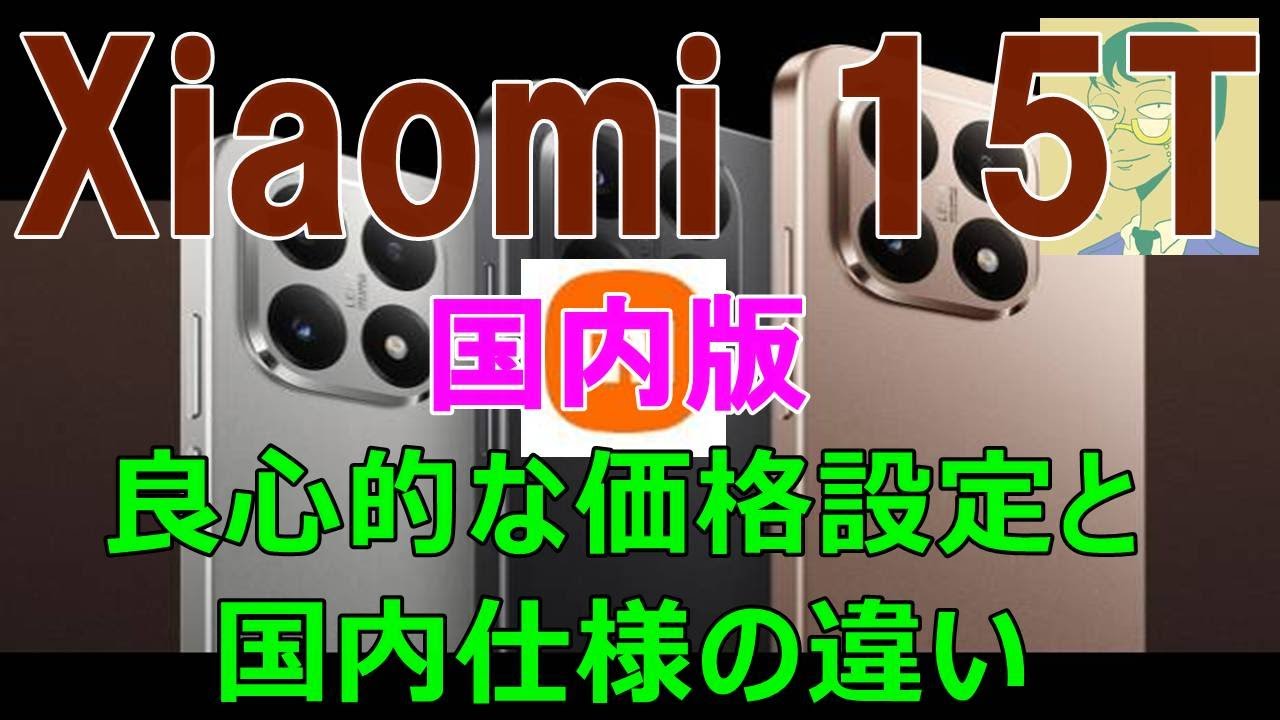
9/26発売。Xiaomi 15T国内版はSIMフリー版発売。良心的な価格設定もおサイフケータイ非対応
Xiaomi has released a new device for the Japanese market. This time, we ‘ll be looking at the Xiaomi 15T. The previous model was sold exclusively through au-affiliated carriers. This model is available as a SIM-free version. It was released on September 26, 2025. The unbranded version comes in two grades, shown here, differing in storage capacity. For reference, the previous model was a single grade, originally priced at ¥57,300. It features a 6.83-inch screen, a 1.5K resolution display, HDR10+, a peak resolution of 3200 nits, Gorila Glass 7i, and a maximum refresh rate of 120Hz. It measures 163.2mm wide, 78mm high, and 7.5mm thin, and weighs 194g. The previous model differed in materials and weight. It uses a MediaTek Dimensity 8400-Ultra CPU and does not support external storage. The camera is Leica, with a triple configuration of 50MP main, 50MP telephoto, and 12MP ultra-wide-angle, plus a 32MP front camera. It features a 5500mAh battery with 67W fast charging. It’s waterproof and dustproof, with an IP68 rating, meaning it’s dustproof and submersible. The OS is Android 15 equivalent, with Wi-Fi version 6 and Bluetooth version 6.0. 4G and 5G band support is as shown. Other features include nanoSIM + eSIM (dual SIM), under-screen fingerprint authentication + face recognition, stereo speakers (Dolby Atmos + high-resolution audio), and no cooling function or Osaifu-Keitai support. Available in three colors: black, gray, and rose gold. This device is considered a semi-high-end smartphone. While there’s little information available about the CPU, it scores in the 1.7 million range. The previous model also featured an Ultra processor, and this one also features an Ultra processor. It’s also used in the POCO X7 Pro and Redmi Turbo 4. The biggest advantage is that the unbranded SIM-free version feels slightly larger, making it easier to purchase. There are some concerns about performance and functionality. One is the refresh rate. It was originally a high 144Hz, but that’s not a big deal. The resolution has been increased to 1.5K, and the glass material has been upgraded. In fact, performance has improved. The other is the loss of Osaifu-Keitai support. Is this a cost-cutting measure rather than a reduction in camera pixel count or battery performance? It’s a strange change, especially since the previous model was a versatile model and priced lower than this one. Strengths include improved band support and comprehensive communication features. The offline calling feature is an interesting feature. It will likely be particularly useful for those concerned about weak signal strengths, especially those with a carrier or network environment. This is all for today’s video. Please subscribe and like the channel as it encourages me to continue creating more. Thank you for watching.
This video supports English subtitles.
If you live in an English-speaking country, please use the subtitles function.
【目次】
00:29おもな性能・機能(Main performance and functions)
01:44CPU性能(CPU performance)
02:01先代との違い(Differences from the previous generation)
※使用している画像はシャオミジャパン等より引用しております。
The images used are taken from Xiaomi Japan etc.
※音声読み上げにはVOICEROID2:桜乃そら(声:井上喜久子氏)を使用しています。
For voice reading is VOICEROID2:sora sakurano(voice person:Kikuko Inoue)
Xiaomi 15T(Xiaomi Japan)
https://www.mi.com/jp/product/xiaomi-15t/
ブログではProバージョンとともに紹介しています(The blog introduces it together with the Pro version.)
https://yaoyorozuya.info/xiaomi-15t-15tpro-jp/
yaoblo top page(blo version:Japanese)
https://yaoyorozuya.info/
X(旧Twitter)
https://x.com/yaoblo1021