
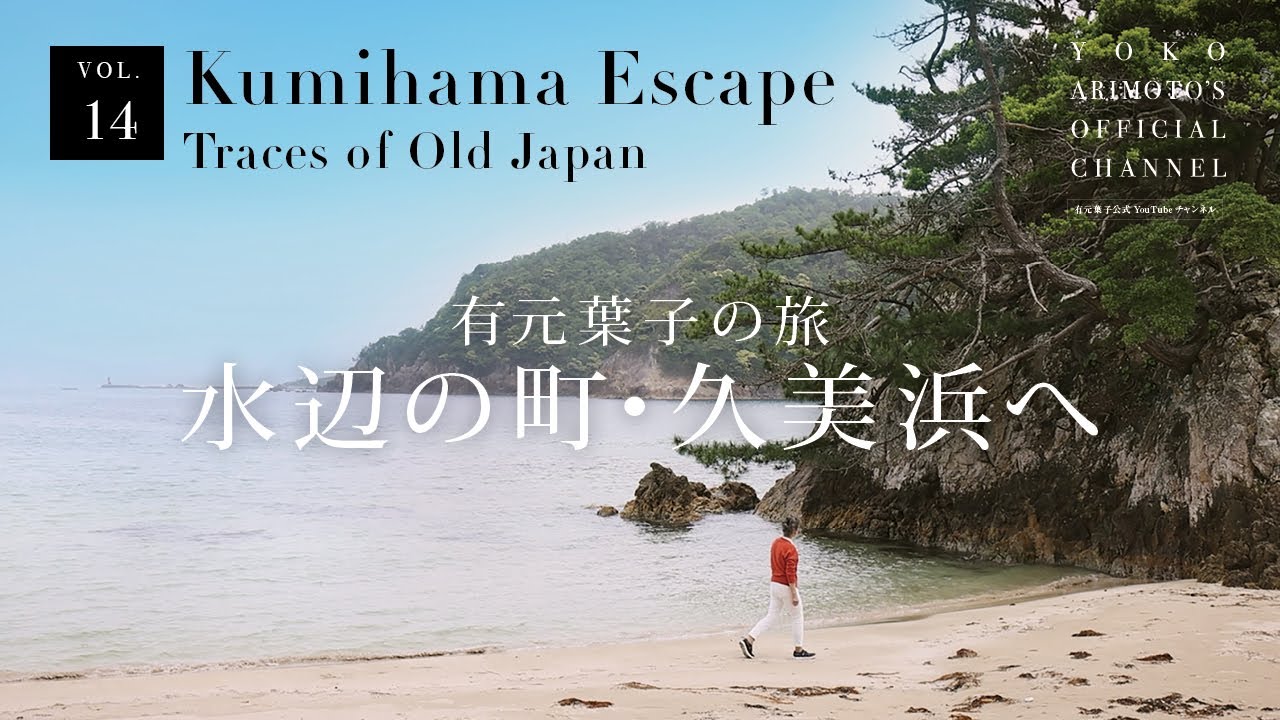
Vol.14 – Yoko’s Little Journey to Kumihama: Where Waters and Time Gently Flow
Kumihama, Kyotango City, Kyoto Yoko’s Little Journey to Kumihama: Where Waters and Time Gently Flow The Story of Etsuko Suda – Host of Waterside Cottage Heron I wanted time to think about what I really want to do… I wasn’t clear on what I wanted to accomplish through my life. In the midst of that… I thought maybe running a guesthouse was something I could manage on my own. So I decided to run a guesthouse as a base for thinking about what I want to do with my life. That’s what led me to live here. This place feels truly close to water — not like being beside the powerful Sea of Japan, but rather gentle, quiet waters that you live alongside. That quietness, that softness — it really spoke to me. I started by creating a place of refuge for myself here, and I’m still slowly searching for my dream. This is Kumihama, located on the Sea of Japan side of Kyoto Prefecture, on the Tango Peninsula. At the eastern base is Miyazu, where the famous Amanohashidate is. Kumihama is at the western base, and just next to it lies the border with Hyogo Prefecture. It was about 20 years ago, I was working with an import wholesale company, and one day the owner wanted to build a logistics warehouse in the countryside. While looking for property, we discovered Mt. Kabuto, and decided to build the warehouse here. We were completely drawn in by the view from Mt. Kabuto. Climbing the bare hillside and looking down on Kumihama Bay, with the mountains of Kinosaki in Hyogo in the distance—I was enchanted by that view. That was the moment I first realized how wonderful this place is, and that led me to live here. Up to my 40s, I was entirely an eat-out type of person. My work kept me busy and rarely at home, so the idea of spending time cooking for myself didn’t even cross my mind. But alongside the warehouse, we also ran a café. I was in charge of creating the menu. When the company decided to start a hotel, I was again responsible for the food. So I thought, I’d better start by learning how to cook proper meals for myself. At that time, I discovered a cookbook— Of course, I already knew her name, but it was by Yoko Arimoto, the culinary expert. Among many of her cookbooks, I found one called Two-Dish Meals with Classic Side Dishes. And I thought, this is exactly what I need right now. First, I needed to learn to cook for myself, before I could think about meals to serve guests. So I made every single recipe in that book. That’s when I realized how important home cooking really is. Arimoto-sensei’s cooking is so stylish—she has incredible taste. It’s striking. Her presentations are visually stunning. The combinations of dishes and tableware are often surprising and fresh. But more than anything, I was deeply moved by her respect for the essence of “eating well.” It was from her philosophy that I began to shape my own menu. That was the start. We also have a traditional boat house here at Heron for the maruko-bune. Our neighbor across the way has one too. There’s another river nearby that leads into the bay. There’s no boat house there now, but there are steps for docking. These maruko-bune were once a common mode of transport in this region. Kumihama was a thriving port town. Ships of the Kitamae route would always stop here. Because the bay entrance is narrow, large ships couldn’t come in. So the maruko-bune would go out to meet them and carry goods. There weren’t any proper roads back then, so these boats were essential for travel. There were even farms on Mt. Kabuto, and farmers would take boats to get to them. They’d ride in maruko-bune to go work in their fields. It was their only means of transport. Nyoiji Temple follows the Shingon Buddhist tradition from Mount Koya. This temple doesn’t have parishioners—it’s a “prayer temple.” They hold monthly ceremonies called “Tsuitachi Mairi” (First-Day Visit). They’ve faithfully continued traditional Shingon rituals for years. The head priest happened to love wildflowers, so he created a mountain garden behind the temple’s main hall. It features local native plants as well as flowers that harmonize with the setting. This garden is like a spiritual talisman for the people of Kumihama. It’s such a lovely place… I really think more people should visit. There’s nothing here, but that’s exactly what makes it feel so good. There aren’t many places left where “nothing” feels so wonderful. Everyone who visits here notices something. People always say first, “Wow, it was far to get here!” But they always feel, “There’s something special about this place.” Even if they can’t put it into words. They often say, “Even three or four days isn’t enough time to really enjoy it.” There’s something here… something invisible, I think.
Why had I never heard of Kumihama, a little town in Kyotango, Kyoto until now?
Facing a quiet bay and surrounded by wildflowers and trees, Kumihama is a truly peaceful place.
I was fortunate to be invited by a friend who said, “There’s a lovely inn there, you should definitely visit.”
So I took a short trip, just a little beyond my usual path.
Waterside Cottage Heron is a warm and welcoming guesthouse run entirely by one woman, Ms. Etsuko Suda. She fell in love with the nature and rhythm of Kumihama and decided to make it her home.
To my delight, she shared that over 20 years ago, she came across my book Two-Dish Meals with Classic Side Dishes, tried every recipe in it, and discovered the joy of home cooking and nourishing herself well.
The sea breeze flows gently through the pine forests.
Old maruko-bune, traditional wooden boats once used in daily life, rest quietly by the water’s edge, near wooden-fenced homes that have stood for generations.
Kumihama is unlike anywhere I’ve ever visited.
At first glance, it may seem unassuming, but something invisible runs deep — an ancient thread connecting past and present — giving the town a quietly sacred atmosphere.
The historic Nyoiji Temple, facing the sea and embraced by mountains, has a garden that blends naturally into the wild hillside. It is filled with native mountain plants and feels like a natural botanical garden — extraordinary and serene.
Japan is still full of places like this, quietly waiting to be discovered.
Waterside Cottage Heron
Nyoiji Temple
https://www.nyoiji.com
#yokoarimoto #lifeinjapan #有元葉子
10 Comments
有元葉子さんが久美浜へ!? ビックリしました、、、地元です。 わけもなく嬉しい。
葉子先生素敵😉
如意寺のお庭の美しさに魅せられました。須田さんの穏やかなお話も素敵でした。いつか是非お伺いしたいです。素敵な場所をご紹介くださりありがとうございます。
金曜日の疲れきった夜に、美しい景色と静かな波の音で、とても癒されました。
ありがとうございます。
映画を見ているような美しさ。素敵な須田さんのお話。そして有元葉子さんの佇まいが、週末の疲れた身体と心に温かく染み入りました。
久美浜町のある京丹後市は元気なご長寿の方が多いところです😊
有元先生のYouTubeチャンネルは私の宝物です🎁
心が自然と豊かになる感じで
いつも癒されています。
ありがとうございました。
素敵な久美浜の紹介ありがとうございます。是非行ってみたい場所の1つになりました。日本には、まだ私が知らなかった美しい場所があるんだなぁと感慨深く拝見致しました。有元先生の動画からいつも癒やされ、アップされるのを楽しみにしています。
Lovely