
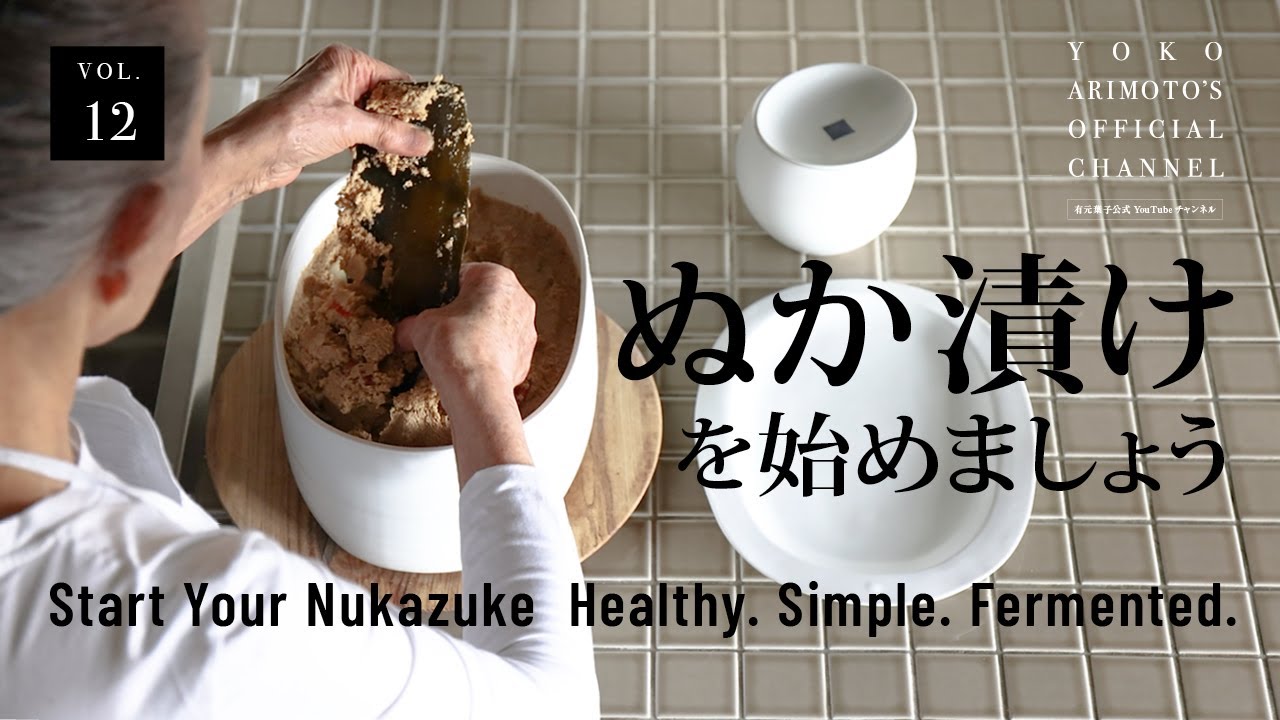
Vol.12 Make Nukazuke at Home – A Traditional Japanese Fermented Superfood
Vol.12 Make Nukazuke at Home
– A Traditional Japanese Fermented Superfood Let me explain what nuka is…
Nuka is the outer layer of brown rice that’s removed during milling—also known as rice bran. To get this small amount of rice bran, you actually need a lot of rice. This is 5 kg of white rice, and the bran here is maybe 300 to 400 grams. So, milling 5 kg of white rice gives you just this much nuka. You can usually buy nuka at your local rice shop. Since they mill rice on-site, you can ask for freshly milled bran, which is ideal. Here are the ingredients for making a nukadoko (fermentation bed): This is the rice bran. Salt. Water. Kombu, soybeans, and chili pepper. And a large mixing bowl. Let’s make a basic nukadoko. First, pour the bran into a large bowl. Then add the salt. You can adjust the amount of salt—a bit more or less is fine. Now mix it well. Once it’s roughly mixed, start adding water. Add just enough to make it easy to mix.
No need to measure exactly. I’ll add a little more… Add the water gradually and mix thoroughly. Use your hands to squeeze and turn the mixture. You’re aiming for a texture that’s moist but not too wet. This feels just right. Now we’ll add the kombu, chili pepper, and soybeans. It’s perfectly okay to add them at a later time. Transfer the mixed nukadoko to your fermentation crock or container. The nuka is still new and the kombu is still stiff. Now, we’ll start by adding vegetable scraps—the tail end of a daikon, the crown of a carrot, or cabbage cores—any scraps that release moisture. At the beginning, it won’t taste great. But as you repeat the process, lactic acid bacteria will flourish and it’ll get more delicious. So don’t be discouraged early on. Keep mixing and using it every day— in about 2 to 3 weeks, it’ll become wonderfully tasty. Just don’t give up. Mix and tend to it daily. You’ll notice it getting better with each passing day. Hello again. Today, I’d like to talk about what you can add to your nukadoko. The rainy season has just begun, and it will continue for a while. This is the perfect time to give your nukadoko a little extra care. Right now, mine is in excellent condition. When fermentation is going strong like this,
I like to add grilled salted salmon heads to the nukadoko. Not this many, of course—my container only fits one at a time. But I grill it until it’s nice and crispy and then add it in. Why do I have four today?
Because salted salmon heads have become harder to find lately. So when I come across them, I buy extras, grill them, and freeze them already cooked. You can add them straight into the nukadoko from frozen. So if you find them, grab two or three and keep them ready. I slice the head in half lengthwise before using. I also like to add fresh sansho berries—they’re in season now. Leaves are fine too, but the berries are better if you have them. Green plums and dried chili are nice additions as well. You can add them from time to time to refresh the bed. Kombu and dried soybeans can also be added as you like. People are often surprised when I say I add salted salmon heads to nukadoko. Why do I do it? Well, I learned it from a book published 40 or 50 years ago by a cooking expert I deeply admire, Mrs Hamako Tatsumi. In her book, she wrote that grilling the salted salmon head and adding it makes the nukadoko taste better. She also mentioned green plums and sansho berries. At the time, I was just getting into nukadoko, so I thought,
“Why not try it?” I was curious to see what would happen. And the results were amazing—it tasted incredible. So now I do it every year. Adding the salmon head is best during this season, because fermentation is at its most active. The lactic acid bacteria are thriving. If you add the grilled salmon head now, it’ll disappear in about three days. It breaks down completely—you’d never know it was there. That’s proof the bacteria are actively breaking down
things like calcium and other nutrients. As for sansho—I love it, so I always add it. But if you don’t like it, there’s no need to use it. There’s no rule saying you must. Use it only if you enjoy the flavour. I once told fermentation expert Dr. Koizumi
that I add sansho to my nukadoko. He said, “Oh, I don’t—I don’t like it.” And that’s totally fine! Just go with your taste. I’m not sure exactly what green plums do, but Tatsumi-sensei wrote that they’re good for nukadoko, so I follow her advice. Once they turn a nice brown color in the bed, you can slice them and enjoy their tart, delicious flavour. Chili peppers are good too, and you can even use yellow mustard powder—it goes especially well with aubergine. There’s no fixed rule for what you must add. Try different things, experiment, and find what works for you. What matters most is mixing it thoroughly every day. At least once a day—no skipping! The last few years have been really hot, so even indoors, the heat can affect your nukadoko. Even if you mix it morning and evening, you may still find a white film forming on the surface. If it’s white yeast, you can just mix it in. But if you see blue or black mold, you’ll need to discard and restart your nukadoko. Think of it as a living thing. It needs your care and attention to thrive and taste great. If you tend to it with love, you’ll enjoy delicious pickles—and I’d be so happy to hear that. Today, I’ll be adding a grilled salted salmon head. It’s nicely browned on both sides. It’s cooled down a bit, but still warm—
that’s totally fine. Just press it right into the nukadoko. Putting it in—say, in the morning. If you mix it again in the evening,
you’ll see it’s already breaking apart. One piece is enough for a container this size. Next, I’m adding green plums.
There’s no specific number—just toss in however many you have. I’ll also add some sansho berries. Again, only if you like them—
you can skip anything you don’t enjoy. Other good additions are soybeans and kombu. I’ve already crushed the grilled head a bit,
but it’ll completely dissolve soon. Salted salmon heads are hard to find these days, so if you’d like to use one,
you can substitute with the collar (kama) portion. Choose a piece that’s well salted—avoid anything too mild. Grill it until crispy.
You can eat the meat with rice, and put the bones into the nukadoko—just like I did here. If your nukadoko is healthy,
the bones will disappear in 2–3 days. And always keep the area around your container clean. Today I have aubergine and cucumber in the nukadoko. The cucumber looks beautifully pickled. And here’s the aubergine. When aubergine comes out a deep, good color, it means your nukadoko is in great condition. Since your hands will get dirty,
this is a good time to give it a thorough mix. Then all you need to do is give everything a quick wipe. Turn it over completely. Mix well. It can get messy, so it’s best to do this inside the sink. Now, I’ll wash my hands. Wash the aubergine thoroughly—don’t cut it yet. First, give it a firm squeeze. Use your whole hand to press it tight.
It’ll shrink, but that’s okay. This helps the color develop better and gives it a nice texture to eat. The color depends on the nukadoko’s condition, but also on how fresh the aubergine is. If you use one that’s been sitting in the fridge for 3 or 4 days, you won’t get that beautiful color—
even with a perfect nukadoko. Wipe the edges clean and press the mixture down firmly. If any bran sticks to the rim, rinse it off with water. Keep the outside clean as well. Wipe everything thoroughly. If the lid is dirty, give it a quick clean too. Put the lid back on,
and you’re ready to pickle your next batch. Here we have the “Garlic Village” set. It comes from Takko, Aomori,
where they grow organic garlic. I visited the farm and spoke with them—wondering,
“Could they create something wonderful with their crops?” And that’s how this nukadoko kit was born. We don’t add the garlic at the beginning—
it goes in later. These chili peppers are also from the Aomori region. So is the sea salt—and the kombu. And the sansho leaves?
They grow around the garlic fields. They’re dried, and best added later on. To start, use the rice bran, salt, chili, and kombu.
Add soybeans if you have them. This rice bran is made from pesticide-free rice—
safe and clean. If you’re particular about ingredients,
a kit like this might be perfect for you.
The season for beautiful nukazuke has arrived. Join me in starting your own nukadoko at home—it’s easier than you think.
#有元葉子 #lifeinjapan #yokoarimoto
•••••••••••••••••••••••••••••••••••••••••••••••••••••
Rainy season is approaching in Japan, and now is the perfect time to start making nukazuke.
As temperatures rise, the beneficial bacteria in the nukadoko (rice bran pickling bed) become more active, producing vibrant, deeply flavorful pickles.
Cucumbers, aubergines, myoga, and young ginger are just coming into season—making this the ideal time to begin your own batch of nukazuke.
Rice bran (nuka) is the fine powder made from the outer layers and germ that are removed when brown rice is polished.
The iri-nuka (toasted rice bran) commonly sold in Japanese supermarkets is heat-treated.
For my nukadoko, I use nama-nuka—raw rice bran that hasn’t been roasted or processed.
If you have your own rice mill, you can use the bran it produces at home.
If not, try asking your local rice shop—they may be happy to share some nama-nuka with you.
With crisp, freshly pickled vegetables and a simple salted rice ball, even the sweltering heat of summer feels a little more bearable—as if they hold the secret to getting through it.
If you need more in-depth guidance, you may find my handbook Nukazuke-chō (published by Chikumashobo) useful.
ISBN-10: 4480879064 / ISBN-13: 978-4480879066
This charming little book is filled with practical tips, answers to common questions, and reflections drawn from my years of hands-on experience.
It also includes an insightful dialogue between myself and fermentation scholar and writer Prof. Takeo Koizumi.
•••••••••••••••••••••••••••••••••••••••••••••••••••••
What You Need for Basic Nukadoko
– Raw rice bran (nama-nuka): 1kg
– Salt: 240g (preferably Japanese, slightly moist in texture)
– Water: as needed (prepare about 1 liter)
– Kombu, soybeans, dried red chili, fresh sansho berries: optional additions
•••••••••••••••••••••••••••••••••••••••••••••••••••••
The organic nukadoko kits from Takko, Aomori, appear to be sold out at the moment, but for restock updates or inquiries about their delicious garlic, please visit the link below.
*This video is not sponsored or part of a paid promotion.
Wanosato – Takko no Iimono (Fine Goods from Takko, Aomori)
https://www.aomori-ninniku.jp/
11 Comments
今日もとっても可愛くて素敵な有元先生、ためになるお話をありがとうございました😊 糠漬け大好物です!
本当に美味しそうなぬか床😍ただのぬか床じゃありません!さすがです✨したことがありませんが、ぬか床を育ててみたいです。
いつも洗練された素敵な動画をありがとうございます。
とてもお勉強になりました。
先月、ぬか床をはじめました。
まだ1ヶ月なので塩と昆布と唐辛子のみです。
気になっていた先生のご著書を購入します。
ぬか床鉢がモダンで魅力的です。
道具が美しいとお料理が楽しくなります。
まわりに ぬか漬けをやってる人がいなかったので、いろいろ参考になりました。ありがとうございます。
四年ほど前からぬか床はじめました。
一人暮らしの小さなアパート故、大きな容器は置き場所がないので、野田琺瑯のタッパーでちまちまとしております。
ラディッシュの葉を結ぶの、食べやすいしとてもかわいいですね。
鮭の頭は知っておりましたが、何となく自信がなく、今まで知識として留めるのみでしたが、勇気を出してやってみます!(`・ω・´)ゞ
私のお気に入りぬか漬けはカブの実と、エリンギ、しめじです♬
エリンギしめじは取り出したら、焼き色がつくまで香ばしく焼いて食べるのが大好きです🍄
今回も素敵な動画をありがとうございました。
これからもいろいろ見せてくださいね🤗
Какая гармония продуктов.
先生のぬか漬けの本を買ってから、我が家のぬか床に愛着が湧いてきました。
真夏は過発酵したり、酸味が強くなるので、混ぜ方が足りないなかなぁと思案しています。
こんど布巾の話を聞かせて下さい。
こうやって糠床という生き物を丁寧にお世話して美味しく育てていくんですね。
ひとつひとつのシーンが、先生の言葉とともに心に沁みました。
大豆は茹でたのですか?
始めまして
鮭の頭をぬか漬けにするのは、びっくりですが、私の地元では鯖をぬか漬けにします。漁師村からの保存食で、ヘしこと言います。
漬物とは少し違うのですが、とても美味しいです。
これからも先生の動画楽しみにしています😊