
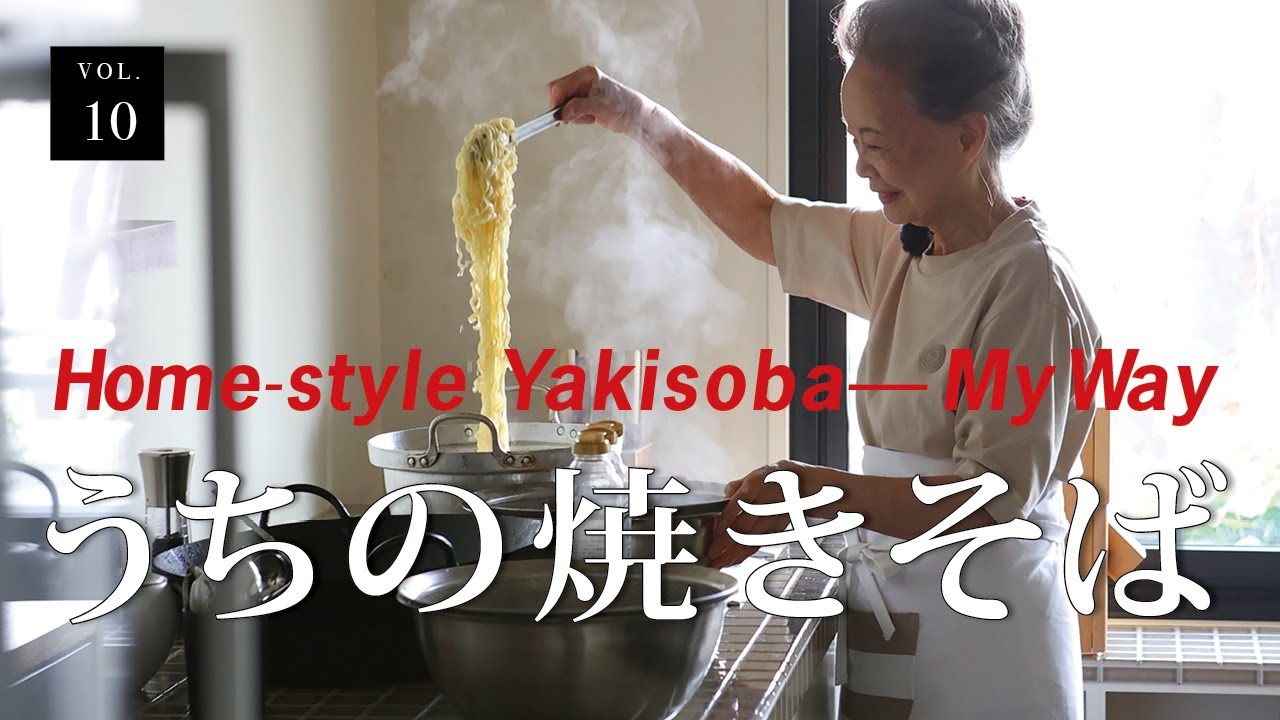
vol.10 うちの焼きそば home style yakisoba my way
I’m going to show you how I make yakisoba at home. These are the kinds of ingredients I usually use. For the noodles, I like slightly thick, dried ones— the kind with a bit of curl to them. But feel free to use any Chinese-style noodles you like. Starting from this side, we have pork, and then sakura ebi. Sakura ebi really adds wonderful flavor, so I highly recommend including it. Then bean sprouts, shiitake mushrooms, ginger, and garlic. Cabbage, green onion… You don’t need to be too particular—just use what vegetables you have at home. It doesn’t have to be exactly like this. You can use seasonal vegetables— cabbage can be swapped with Chinese cabbage, or you could add onions— it’s entirely up to you. It’s a great way to use up what’s in your fridge. Now, let’s prepare the seasonings we’ll need at the table. This is doubanjiang—spicy fermented chili paste. You could also use fish sauce, depending on your taste. And a Worcestershire-style sauce. Plus soy sauce. Today, I have two kinds of vinegar— this one on the left is milder, and this one has a sharper acidity. Having these on hand will be nice. I like to prepare the table seasonings before cooking. I’m also setting out plenty of doubanjiang. And soy sauce, of course. Some people prefer a soy-based flavor, others like a sauce-based one. Basically, I give the noodles a light seasoning, and then at the table, each person can choose—soy sauce, or regular sauce, or fish sauce, whatever they like. A touch of acidity also adds a nice layer of flavor. So I like to set out a generous amount of vinegar. It’s surprisingly delicious with plenty of vinegar. So I’ll have that all ready at the table. Let’s also think about the tools we’ll need. First, a pot for boiling the noodles. Boil plenty of water. Next, a frying pan for crisping the noodles. And a wok for stir-frying the vegetables. A good spatula is also helpful. Let’s also decide on the serving dishes in advance. Today I’ll serve the vegetables on this platter, and place the fried noodles on this one. Then individual plates for each person. Slightly larger plates are ideal. Since we’ll be putting both the noodles and vegetables on them and adding sauce. So yes, larger plates are better. We’ll also need serving chopsticks and personal ones. And don’t forget drinks— you might want to have some glasses ready. Today I’ve chosen glasses in different shapes and styles— it adds a bit of fun, I think. Now I’m going to dress the boiled noodles with oil. Personally, I like to use both light sesame oil (taihaku) and regular toasted sesame oil with a deeper flavor. I drizzle both over the noodles and toss to coat. But of course, use whatever oil you like. That part is really up to your taste. So yes, the noodles are boiled and coated with oil. Now the vegetable prep is done. The pork doesn’t need any marinade. Cut it into slightly larger pieces than bite-size— not too small. Now for the noodles. I’ve already preheated the pan— once it’s hot, I add a generous amount of oil. Then I begin frying the noodles. I shape them into mounds— for this amount, I’ll make three portions. Just like this. Don’t stir them. Let them sit quietly and fry. Meanwhile, I’ll stir-fry the vegetables in the wok. First, heat the wok thoroughly and swirl in the oil. Among the vegetables, we have the most cabbage today, so I’ll start with that. If you try to stir-fry all of these vegetables at once, it’s actually quite difficult. They release so much water— many people find stir-frying tricky because of this. But if you cook one type at a time, the heat distributes evenly, and you can stir-fry everything quickly without excess moisture. Try not to over-stir. Let it sit spread out a bit. Then gently turn it over. Season lightly with a bit of salt. A touch of salt and pepper, and the cabbage is done. Turn off the heat and transfer it straight to the platter. We’ll continue like this—quickly stir-frying one vegetable at a time, lightly seasoning them as we go. That way, they won’t release water. If it seems like there’s not enough oil, just add a little more as needed. Check on the noodles from time to time, too. Once they’re nicely golden and crisp, flip them over. As you can see in the pan, there’s barely any liquid coming out— just a little oil. If the heat is too high, it becomes hectic. So keep the heat at a gentle, steady level. That way, you can take your time with the vegetables. Let me check the noodles again… Maybe a little longer. The carrots today are quite firm, so I’ll stir-fry them a bit more slowly. These noodles are turning out beautifully, too. And even with all these vegetables, you can see—there’s no excess moisture at all. If you tried to stir-fry them all together, this would be soaked through. But not here—not a drop. So the secret is to stir-fry one vegetable at a time, or combine ones with similar cooking times,
and cook them quickly over high heat. Now I’ll add the sakura ebi. Once the shrimp releases its aroma, I’ll add the green onion. Ah, such a lovely fragrance—
time to add the onion. Just a quick stir is enough. A tiny pinch of salt— once the green onion just begins to soften, that’s perfect. Yakisoba with just green onion and sakura ebi is also delicious. Now, this is just my preference, but I like to use both toasted sesame oil and light sesame oil for the pork. Add garlic and ginger, and once the pork starts to brown, I season it with soy sauce. A little soy sauce and black pepper— I drizzle the soy sauce around the edge of the pan. This gives the pork a lovely aroma. There we are—it’s done. There will be some pork fat left in the pan. If you like, you can pour that over the top. But if you prefer not to use the fat, just skip it. Today, I’ll leave it out. It’s entirely up to you. And now everything is ready.
vol.10
うちの焼きそば
麺は麺だけで、表面をカリカリ、中をふんわりと焼く。
野菜や肉などの具は1種類ずつ、
あるいは火の通りの同じぐらいのものを2種類ぐらいずつ
サッとおいしく炒めて、大きなお皿に重ねていく。
そうして麺のお皿、炒めた具のお皿のふたつを食卓へ運び、
ソースやしょうゆや豆板醤(トウバンジャン)や酢などをかけて
自分で好みの味にして食べる……。
うちの焼きそばは、こんなスタイルです。
麺は麺として、野菜炒めは野菜炒めとして
おいしく作って食べたくて、こうなりました。
この作り方なら、大人数の分量でも上手に作れます。
「野菜炒めが水っぽくなって、いつもうまくいかない」という人にも
この方法はおすすめです。
家族や友人が集まるゴールデンウィークのお昼ごはん、
みんなで焼きそばはいかが?
うちの焼きそば
材料(4人分)
中華麺(少し太めの乾麺)4玉
豚肉 200g
しょうが、にんにく 各1かけ
桜えび 1袋
長ねぎ(青い先端は切り落とす) 1本
にんじん 5~6cm
しいたけ 4~5個
ピーマン 4個
小松菜、にら 各1/2束
キャベツ 1/4玉
パプリカ(赤) 大きな丸いものなら1/2個
パプリカ(黄) 中1個
もやし 1袋
太白ごま油、ごま油 各適量
塩、しょうゆ、粗挽き黒こしょう 適量
〈卓上に用意する調味料〉
ソース、しょうゆ、米酢、豆板醤、ヌクマム 適宜
1 お湯をたっぷり沸かして中華麺をゆで、水気をきって太白ごま油とごま油を回しかけます。
2 しょうが、にんにくは皮をむいて、せん切りにします。
3 もやしはひげ根を取ります。
4 しいたけは傘と軸に分けて、傘は薄切りに。軸は石づきを切り落とし、手で細く裂きます。ピーマンは縦に削ぐように切り、へたと種を取り除いて、縦に細切りにします。
5 小松菜、にらは5cm長さに切ります。パプリカは上下を落として開き、種を取り除いて端からせん切りにします。
6 長ねぎは3等分ほどの長さに切り、縦半分に切って、端から細切りにします。にんじんは皮をむき、5〜6mm角の棒状に切ります。豚肉は大きめの一口大に切ります。
7 キャベツは縦4等分に切って芯を切り落とし、長さを半分に切って、端からザク切りにします。
8 フライパンを熱して太白ごま油を多めにひき、1の中華麺をひと玉分ずつかたまりで入れます。混ぜずにひと山ずつの状態のまま、中火弱でじっくり焼きます。麺を焼きながら、隣のコンロで具を炒めます(以下のプロセス9~12)。具を炒めながら麺の様子を見て、カリッと香ばしく焼けたら返し、両面がカリッと焼けたら皿に取り出します。
#YOKOARIMOTO #有元葉子 #lifeinjapan
9 中華鍋を熱して太白ごま油をひきます。キャベツを広げて入れ、しばらくそのまま熱して焼き色がついたら返し、軽く塩、こしょうをふって火を止め、大皿に取り出します。
10 空いたフライパンにピーマンを入れ、油を足して炒め、軽く塩、こしょうをして大皿に取り出します。以下、パプリカ、小松菜、にんじんとしいたけ、もやしとにらを順に炒めて塩、こしょうをふり、そのつど大皿に重ねていきます。
11 空いたフライパンに油を足し、桜えびを炒めます。香りが出たらねぎを加えてサッと炒め、軽く塩をふり、具の大皿に取り出します。
12 空いたフライパンに太白ごま油とごま油をひき、にんにく、しょうがを入れて弱火にかけます。香りが立ったら豚肉を入れて火を強め、肉に焼き色がついたら鍋肌からしょうゆを加え、こしょうをふります。これも大皿に移します。
13 卓上で各自が麺を取り、肉と野菜炒めをのせて、好みの味をつけていただきます。
24 Comments
良い油を使う事、種の飛び散らないピーマンの切り方、火加減への気配り、野菜くずを取り分けておく(スープを取る、あるいは堆肥にする等して循環させる)…これまで有元さんの著書を通して教わって来たことが幾つも思い出され、感動して少しウルッとしてしまいました。
焼きそばってこんなエレガントなお食事になるものなんですね…。
総合芸術
包丁もまな板も使わないズボラレシピも知識としてはアリだと思いますが、調理中の所作、調理そのものを楽しむ姿はとても美しいものですね✨
そして台所!広い作業台のある台所!大きな冷蔵庫!
作業効率も上がるし羨ましい~、憧れです🤗🤗
ラバーゼ製品、本当にどれも使いやすそう……✨
なるほど目から鱗レシピ。。すぐ!!やります!!!
キッチンの小宇宙✨✨✨✨
素晴らしいです✨✨✨
感動いたしました!
1種類づつ焼いていくと油を使いすぎるような気がしますがー
油いっぱい使うんですね!
🤤
焼きそばの乾麵がなかなか販売されているところの出会えません。だいぶ探したのですが。今回のはどちらのものですか。どうぞお教えくださいませ。
美味しそう。。。
Thank you from France !
焼きそば君も幸せだろうなぁ🥰
初めて見るピーマンの切り方に感動
中華鍋がどちらのものか気になります
素晴らしすぎます
手順の美しさにうっとりしました
焼きそばで、ホームパーティーができるなんて❣️
野菜炒め一品ずつ、早速取り入れます。
いつもながら、先生のながれるような所作にウットリです。
今日も楽しく拝見しました。
ありがとうございました❤
野菜を切る音、炒める音、ジュースを作る氷がパチパチとはぜる音、炭酸を注ぐ音…料理の音、彩りが美しい材料達。有元先生の動画が好きな理由の1つです。
我が家は、ただのソース焼きそば。丁寧に作る事、自分で好きな味付けを楽しむ焼きそばの概念が変わりました。
こんだけ都度油足してたらギトギトしてそう
誰かと思ったら有本葉子さんでしたか😮😂😅
スローすぎます。
主婦歴25年ですが、目から鱗!大変参考になりました。早速作ってみたいです!
今回も美しく美味しそうな映像と優しい調理音で❤とても楽しく見させて頂きました!焼きそばレシピの新発見の数々!ピーマンのカット方法!乾麺を茹でてから焼き付ける!味付けの最後は各自で!
チャレンジしてみます😊