
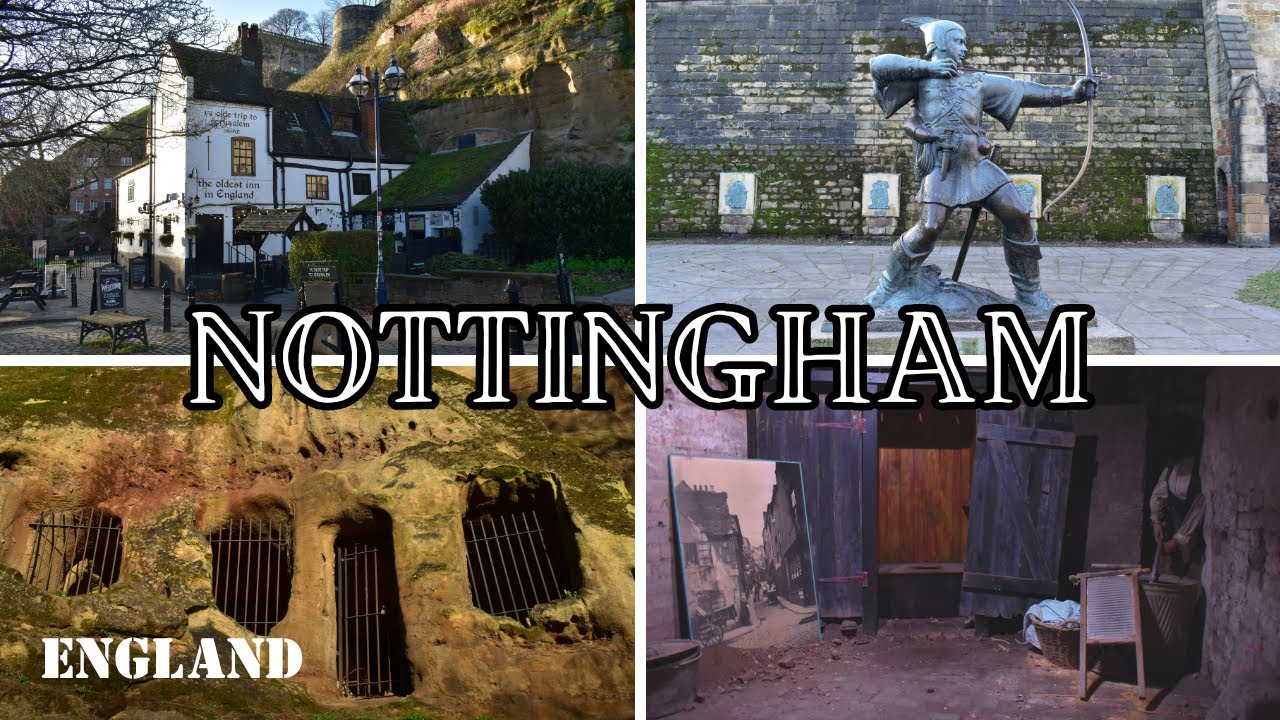
Nottingham – Tales of Robin Hood and City Mysteries /England/
Welcome, fellow adventurers, to a journey through time and charm in the heart of England! Today, we’re about to embark on a captivating exploration of Nottingham’s rich history, delving into its iconic historic buildings, mysterious cave network beneath the city, and concluding our adventure with a delightful visit to a unique kitty café.
Make sure to hit that subscribe button and ring the notification bell so you won’t miss any of our future explorations. We begin our Nottingham adventure by parking at the Robin Hood Statue Car Park, where the hourly rate is £2.40. From this central location, we embark on our exploration of the city.
To kickstart the day, we treat ourselves to a delectable breakfast and coffee at the inviting Costa Café. The name “Nottingham” has Old English origins. It is believed to be derived from the combination of two words: “Snot,” which was a personal name, and “ingaham,” meaning “homestead” or “village.”
Therefore, Nottingham essentially means the “homestead of Snot’s people” or the “village of Snot.” The name has evolved over the centuries, with variations such as Snotingaham in the Anglo-Saxon period and later becoming Nottingham in Middle English. Nottingham’s history dates back to Roman times, but it truly flourished during the medieval period.
During the Industrial Revolution, Nottingham played a pivotal role in the textile industry, earning the nickname “Queen of the Midlands.” The lace-making heritage is still evident in the city’s fabric. The iconic Nottingham Castle, perched on a high rock, has stood witness to centuries of events, from battles to royal intrigue.
Notable figures like Robin Hood are intricately woven into Nottingham’s folklore, adding a touch of legendary mystique to the streets we tread today. The tale of Robin Hood unfolds in the nearby Sherwood Forest, steeped in medieval lore. His exploits, whether outwitting the Sheriff of Nottingham or redistributing wealth to the poor,
Have left an indelible mark on Nottingham’s history. The most prominent representation of this iconic outlaw is the Robin Hood Statue located beneath the Castle. This bronze tribute captures Robin Hood in his element, bow in hand, ready to defend justice, with the point of his arrow aimed at the gatehouse and the establishment within.
Encircling the main sculpture are smaller depictions of notable characters from the Robin Hood tales —Little John, Friar Tuck, Alan A Dale, and Will Scarlett. The surrounding wall plaques further bring the legendary adventures to life, illustrating scenes from the captivating stories of Robin Hood and his Merry Men.
Together, this ensemble of sculptures and plaques transforms the site into a vibrant tribute to the beloved folklore that has enchanted generations. Robin Hood’s story is more than folklore; it embodies the spirit of resistance against injustice. Whether facing the Sheriff or aiding those in need,
Robin Hood has become a symbol of the fight for equality and the pursuit of a fair society. In the continuation, we take a stroll around Nottingham Castle, unravelling the fascinating history behind the castle and its associated buildings. Ye Olde Trip to Jerusalem pub rests against Castle Rock, the foundation of Nottingham Castle,
Intricately connected to several caves hewn from soft sandstone. The pub claims establishment in 1189, though without supporting documentation. The first recorded use of the name ‘Ye Olde Trip to Jerusalem’ dates back to 1799. Before adopting its current name, the pub was known as ‘The Pilgrim,’ with references dating as far back as 1751.
The current name is thought to stem from the notion that pilgrims or crusaders would stop at the inn during their journey to Jerusalem. It’s important to note that some linguistic subtleties in the pub’s name are commonly misunderstood today; ‘Ye Olde’ is properly pronounced as ‘the old,’
And ‘trip’ signifies a stop on a journey rather than the journey itself. Beneath the Castle lies the hidden gem known as Brewhouse Yard, a subterranean labyrinth of historical significance. This intriguing space, often overlooked by those exploring the castle above, offers a unique glimpse into Nottingham’s past.
Brewhouse Yard’s history is as diverse as the city itself, tracing back to medieval times. Serving various functions over the centuries, from storage areas and brewhouses to makeshift dwellings, this underground expanse mirrors the ever-evolving needs of Nottingham’s inhabitants. Along with its 17th-century cottages, Brewhouse Yard recounts the lives of residents spanning over four centuries
And welcomes curious explorers on guided tours today. The Castle’s history dates back to the years following the Norman Conquest of England in the 11th century. William the Conqueror ordered the construction of a wooden castle on the sandstone outcrop overlooking the city of Nottingham.
This initial structure served as a strategic fortress to control the Midlands. In the 12th century, during the reign of Henry II, the wooden castle was replaced with a more formidable stone structure. Over the years, the castle underwent various modifications and expansions.
Nottingham Castle became a royal residence and played a significant role in medieval politics. It was a key location during the reign of King Richard the Lionheart and later served as the setting for significant historical events, including the infamous legend of Robin Hood.
Nottingham Castle gained notoriety during the English Civil War in the 17th century. After the Civil War, Nottingham Castle fell into disrepair. In the 17th and 18th centuries, efforts were made to rebuild parts of it, but it was transformed into a ducal mansion rather than a military fortress.
In the 19th century, the Duke of Newcastle undertook extensive renovations, turning the castle into a grand mansion with gardens. Over time, portions of the castle were opened to the public as museums, showcasing art, artifacts, and the history of Nottingham. We continue our walk through the city towards the City of Caves.
Along the way, we find a few sights worth mentioning. Castle Gate street is adorned with a captivating array of buildings that seamlessly blend historical charm with contemporary vitality. As you wander along this thoroughfare, the architecture tells a tale of the city’s evolution. From medieval structures to elegant Georgian facades and modern establishments,
Castle Gate stands as a dynamic testament to Nottingham’s architectural diversity. St Nic’s Church dates back to the medieval era. This historic church exudes architectural elegance and spiritual significance. Its distinctive spire graces the city skyline, inviting visitors to explore its hallowed halls and appreciate the tranquility within. In Nottingham’s historic Lace Market area,
Weekday Cross held prominence as the primary market location in the era predating the Norman Conquest. Referred to as Weekday Market in those bygone days, its streets were bustling with citizens, establishing it as the town’s central hub until the market later shifted to the Old Market Square.
Beneath the streets of Nottingham lies the UK’s most extensive cave network, with over 800 concealed below the surface. The City of Caves allows you to explore the largest publicly accessible section of this expansive underground labyrinth. Now, let’s embark on our exploration of this subterranean wonder. In contrast to other sandstone caves,
Nottingham’s cave network did not form through natural water processes. These caves are entirely man-made, meticulously carved into the sandstone for diverse purposes. Originating from the 13th century, some served as wells, benefitting from the sandstone’s exceptional filtration properties, ensuring the availability of cold, clear water. Others functioned as malt kilns for pottery production,
As well as spaces for keeping animals and tanning leather. As the late 13th and 14th centuries unfolded, these caves primarily served as homes, often occupied due to economic hardships. Folklore even suggests that monks, prisoners, and a leper colony may have found refuge within these subterranean spaces.
This cave originally served as the cellar for the Three Horseshoe pub, one among several pub cellars hidden beneath the city. In later years, it transitioned into a storage space for significant documents when the structures above ground were repurposed as solicitor offices.
In ancient times, caves like this were believed to be excellent hiding spots and potentially used for clandestine meetings, ranging from gambling and smuggling to plotting conspiracies. It’s even speculated that figures like Robin Hood and his band may have strategized their next move on Nottingham Castle within these underground chambers.
Dating back to 1250, this portion of caves initially functioned as malt kilns for pottery production. By the 16th century, its primary association shifted towards the leather trade and tanning. On the wall, you can observe animal hides that have undergone the tanning process, transforming into leather. During the 16th and 17th centuries,
The Broad Marsh area of Nottingham housed the foul-smelling tanning industry. Remarkably, the City of Caves preserves the only known medieval example of a cave tannery in England. The consistent temperature provided by the sandstone in the caves proved highly advantageous for the tanning process.
Although tanning was a noxious and dangerous trade, the unappealing environment, enriched by animal faeces, served as a repellent to rats. Interestingly, the plague was one of the few diseases you couldn’t catch in a tannery. During World War II, 86 caves were converted into air raid shelters,
With the addition of stairs, ladders, and extra entrances. The original sandstone structures were reinforced with brick and steel, and new shelters were constructed. The sand extracted from inside the caves also proved useful, serving the purpose of filling sandbags across the city. The initial surge in Nottingham’s lace trade during the early 19th century
Attracted a mass influx of people from the countryside seeking employment. Subsequently, slums emerged, supplanting the previous residences and transforming the area into an exceedingly unpleasant living environment. By the late 1820s, this locality was teeming with the most impoverished workers, residing in tightly packed homes within narrow alleys and back-to-back courts,
Lacking even the most rudimentary sewage systems. As we traverse one of these streets, we now witness the remnants of a slum dwelling, once a poignant testament to someone’s home. These are the remains of Sam Hancock’s public house, another pub cellar. In the 1890s, the upper floors were dismantled
To make way for the construction of a new railway tunnel, which still exists beyond the brick wall in the adjacent cave. After our strange underground experience, we have returned to the present and are heading towards the city center. The Cathedral Church of St. Barnabas was built in the Early English Plain Gothic style
In the 19th century and is a prominent religious landmark in the city as the mother church of the Roman Catholic Diocese of Nottingham. It serves as the seat of the Bishop of Nottingham. The cathedral, dedicated to St. Barnabas, boasts architectural grandeur with its striking façade and graceful spire that grace the Nottingham skyline.
As we approach the bustling heart of Nottingham, the city center unfolds with a vibrant mosaic of modernity and history. A juxtaposition of contemporary architecture and historic landmarks, the city center captivates with its diverse offerings. The surrounding streets, lined with a mix of traditional and trendy establishments, showcase Nottingham’s dynamic character.
St. Peter’s Square and the Lace Market, with their historic charm, stand testament to the city’s rich heritage. St. Peter’s Church, an architectural gem, beckons visitors with its rich history and timeless beauty. Dating back to the medieval era, the church stands as a testament to centuries of worship and community.
Its striking facade, adorned with intricate details and stained glass windows, reflects a harmonious blend of Gothic and Victorian architectural styles. The beating heart of the city, The Old Market Square stands as a focal point, inviting visitors with its open spaces adorned with fountains and surrounded by a mix of historic and modern elements,
Including shops, cafes, restaurants, and cultural venues. Nottingham Council House, an architectural masterpiece with its stunning facade and intricate details, serves as the seat of the city’s local government. Completed in 1929, the Council House is a symbol of civic pride and an important landmark in Nottingham’s skyline. Visitors are drawn to its impressive architecture,
Including the iconic dome and the Exchange Arcade. Beyond its visual appeal, the Council House plays a central role in the city’s governance and continues to be a focal point for civic events and celebrations. The Left Lion is one of two lion statues in the square, the other being the Right Lion.
The Left Lion is often considered a symbol of Nottingham and is a popular meeting point for locals and visitors alike. The statue has become an iconic landmark in the city. It was carved by Joseph Else in 1928 and was originally intended to represent strength and majesty.
The Left Lion is a well-known and beloved feature of Nottingham’s cityscape. Speakers’ Corner in Nottingham stands as a testament to the city’s commitment to free expression and public discourse. This open space provides a platform for individuals to share their thoughts, opinions, and ideas with the public.
It serves as a vibrant hub for debates, speeches, and discussions on a myriad of topics, reflecting the diverse perspectives of Nottingham’s residents and visitors. Speakers’ Corner embodies the democratic spirit of free speech, fostering an environment where individuals can engage in constructive dialogue and exchange viewpoints.
The Brian Clough statue at Speakers’ Corner stands as a striking tribute to one of Nottingham’s most iconic figures in football history. Brian Clough, renowned for his legendary managerial career, particularly with Nottingham Forest, is immortalized in bronze at this prominent location. The presence of this statue not only honors Clough’s significant contributions
To Nottingham’s football legacy but also serves as a source of inspiration for sports enthusiasts and admirers alike who gather at Speakers’ Corner. The Theatre Royal steeped in history and cultural significance, stands as a distinguished venue for the performing arts. With its origins dating back to 1865,
The theatre has undergone various renovations and expansions, evolving into a prominent cultural hub in the city. Its majestic facade and ornate interiors showcase a blend of architectural styles, providing a captivating atmosphere for theatergoers. We conclude our stroll through Nottingham with a visit to the Kitty Café,
A unique and delightful haven for cat lovers. This charming café provides a one-of-a-kind experience, allowing patrons to enjoy a cup of coffee or a delicious meal in the company of resident cats. The café offers a cozy and cat-friendly environment where visitors can relax,
Unwind, and interact with the feline residents, each with their own personality and charm. Kitty Café serves as a popular destination for those seeking a purr-fectly relaxing time. With its whimsical atmosphere and commitment to animal welfare, Kitty Café has become a beloved spot in Nottingham for both locals and visitors alike.
Now we bid farewell to Nottingham, but as you step away from your screen, we invite you to explore Nottingham’s streets in person, immerse yourself in its tales, and savor the unique experiences it has to offer. Don’t forget to hit that subscribe button to join us on more adventures!
We wish you a beautiful day! Until next time!
Join us on a virtual tour through the enchanting city of Nottingham, where history meets modernity in a seamless blend. Explore the iconic Nottingham Castle, witness the tales of Robin Hood brought to life through statues and folklore, and venture into the mysterious City of Caves. Stroll through the vibrant streets of the city center, marvel at architectural wonders like the Council House and Left Lion in Old Market Square, and discover hidden gems like Brewhouse Yard. Immerse yourself in Nottingham’s rich cultural tapestry, from the historic Lace Market to the lively Speakers’ Corner. The journey concludes with a visit to the Kitty Café, offering a unique haven for cat lovers. Come along and experience the magic of Nottingham’s streets and stories from the comfort of your screen and don’t forget to subscribe to our channel for more exciting adventures.
Subtitles are available in 5 languages.
Do you like the music we use?
Is from Epidemic Sound, get 30 day FREE access using our link: https://share.epidemicsound.com/5yi1gm
Facebook: https://www.facebook.com/profile.php?id=100090380051185
Instagram: https://www.instagram.com/roadsidedawns/
TikTok: https://www.tiktok.com/@roadsidedawns
Blogs:
https://unitedkingdom-attractions.blogspot.com
https://attractions-of-the-world.blogspot.com
Chapters:
00:00 Intro
00:33 Robin Hood Statue Car Park
00:46 Costa Café breakfast
00:57 History of Nottingham
01:50 Robin Hood staue
03:36 History of the Nottingham Castle
03:44 Ye Olde Trip To Jerusalem
04:35 Brewhouse Yard
07:44 Castle Gate
08:09 St. Nic’s Church
09:35 Weekday Cross
10:28 City of Caves
14:52 Cathedral Church of St Barnabas
15:28 City Centre of Nottingham
16:23 St Peter’s Church
17:30 The Old Marquet Square
17:49 Council House
18:22 The Left Lion
19:00 Speaker’s Corner
19:32 The Brian Clough statue
20:31 The Theatre Royal
21:19 Nottingham Trent University
22:39 Kitty Café
27:33 Outro
#NottinghamTour #ExploreNottingham #CityofCaves #RobinHoodStories #NottinghamHistory #TravelFromHome #VirtualTourism #KittyCafe #OldMarketSquare #NottinghamCulture #HistoricLandmarks #CouncilHouse #LeftLion #SpeakersCorner #LaceMarket